Thu, September 17, 2026

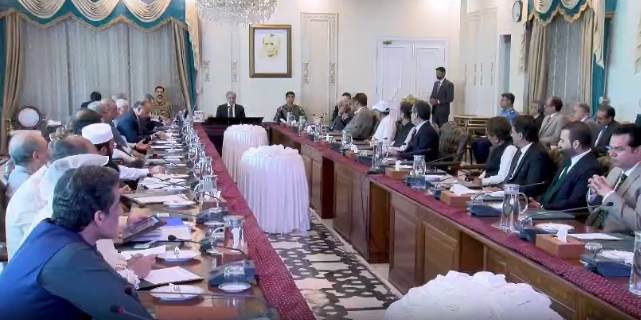
Islamabad (Web Desk): The federal government has approved a comprehensive four-year Hajj Policy and Action Plan covering the period from 2027 to 2030, marking the first time Pakistan has adopted a long-term strategy for organising the annual pilgrimage.
The approval came during a Federal Cabinet meeting chaired by Prime Minister Shehbaz Sharif in Islamabad, where members were presented with a detailed overview of the new framework.
During the meeting, it was briefed that, unlike previous policies that were drafted for only one Hajj season, the newly endorsed plan is designed to provide continuity, strengthen operational planning, and enhance the overall experience for Pakistani pilgrims over the next four years.
The cabinet was informed that detailed Standard Operating Procedures (SOPs) and implementation rules will now be prepared to put the policy into effect.
It was also noted that the framework will remain flexible, allowing revisions whenever necessary to ensure compliance with changing laws and regulations introduced by Saudi Arabia.
Among the major reforms, the policy introduces a continuous Hajj registration system, enabling citizens to register for pilgrimage at any time until 2030 instead of participating in yearly registration drives.
This approach will help authorities maintain a priority-based waiting list for intending pilgrims. The government also plans to launch a Shariah-compliant savings programme, allowing prospective pilgrims to gradually build funds for their future Hajj expenses.
Cabinet members were further briefed that the Hajj management process will be fully digitised. The transformation will include electronic payment facilities, a digital complaint handling mechanism, and modern monitoring systems aimed at improving transparency, efficiency, and service delivery throughout the pilgrimage process.
The new policy retains separate quotas for government-managed and private Hajj schemes while introducing both short-duration and extended Hajj packages to provide greater flexibility.
It also makes compulsory pilgrim training, Takaful coverage, and emergency response arrangements integral parts of the overall Hajj programme.
To ensure fairness and accountability, the cabinet directed that Hajj Muavineen must be selected solely on merit through a transparent recruitment process.
It also instructed the relevant authorities to introduce independent third-party verification of both public and private Hajj operations to maintain service standards.
During the meeting, the cabinet praised Minister for Religious Affairs Sardar Muhammad Yousaf and his ministry for successfully managing this year's Hajj arrangements and acknowledged the team's efforts in facilitating Pakistani pilgrims.
In a separate decision, the cabinet approved a policy to outsource services at the Isolation Hospital and Infectious Treatment Centre, as well as the Regional Blood Centre in Islamabad, with the objective of improving healthcare standards. The Ministry of National Health Services will oversee the outsourcing process in accordance with the applicable legal and administrative procedures.
The cabinet also reviewed the financial and operational performance of Pakistan Railways, noting a significant increase in earnings during the last fiscal year.
The meeting was briefed that Railway revenue climbed from Rs95 billion in 2024–25 to more than Rs115 billion, reflecting a growth of 24.19 percent.
Officials reported that freight operations generated over Rs8 billion in additional revenue, while income from other sources increased by more than Rs7 billion. Earnings from railway land and property increased by Rs6 billion, and passenger services also recorded a 3.37 percent rise in revenue.
The cabinet was further informed that alongside improvements in railway operations, the national carrier had also made notable progress in expanding and strengthening its freight transportation services.
Neo News | Copyright © 2026