Thu, September 17, 2026

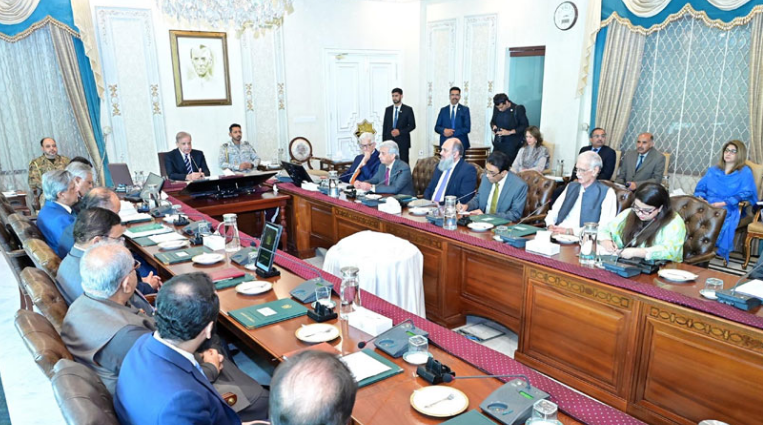
Islamabad (Web Desk): In a significant move towards enhancing technological integration and service efficiency, the federal cabinet has granted approval to two major initiatives — the Hajj Policy for 2026 and the National Artificial Intelligence (AI) Policy for 2025.
These developments reflect the government’s growing emphasis on digital transformation and economic modernization.
Chairing the meeting of the Cabinet, Prime Minister Shehbaz Sharif welcomed full digitalisation of next year’s Hajj operations.
He emphasized the government’s resolve to deliver top-tier facilities to pilgrims, ensuring smooth and reliable services throughout their spiritual journey.
The newly approved Hajj Policy outlines a distribution where 70 percent of the pilgrims will be accommodated under the government scheme, while the remaining 30 percent will fall under the purview of private tour operators.
In light of previous challenges faced by the private sector during Hajj 2025, it was decided that private companies must ensure that affected pilgrims from the previous year are given priority for participation in the upcoming Hajj.
To promote transparency and accountability, a third-party verification mechanism will be introduced to oversee the operations of both government and private Hajj service providers.
Additionally, real-time tracking of payments and other processes will be implemented for pilgrims traveling through private operators.
The policy also allocates 1,000 seats for hardship cases, and a standardized selection process for Hajj assistants will be introduced, including a written test to ensure merit-based recruitment.
The government aims to enhance the overall experience for pilgrims by offering mobile SIM cards, digital wristbands, high-quality lodging arrangements, and compensation provisions for emergencies.
Moreover, the Pakistan Hajj mobile application will undergo upgrades to facilitate payment processing, training modules, and a streamlined complaints resolution system.
On the technology front, the cabinet also reviewed and approved the National AI Policy for 2025, aimed at empowering the youth and stimulating economic growth through artificial intelligence. Prime Minister Sharif underlined the importance of equipping the country’s workforce with modern technological skills, particularly as AI is expected to bring about transformative global economic shifts by 2030.
The AI policy focuses on fostering inclusivity by promoting access to AI education and tools for women and individuals with disabilities. It aims to build a skilled workforce capable of contributing to both local and global AI-driven economies.
To support innovation and entrepreneurship, the policy includes provisions for the creation of an AI Innovation Fund and an AI Venture Fund, both designed to encourage private sector participation and investment.
Moreover, the government plans to integrate AI into various public sectors, including cybersecurity, environmental management, and digital public service delivery. The overarching goal is to leverage AI technologies to boost institutional productivity, strengthen governance, and enhance national competitiveness.
These policy decisions mark a forward-looking strategy by the government to adopt advanced technologies while ensuring equitable access and efficient public services for all citizens.
Neo News | Copyright © 2026