Fri, September 18, 2026

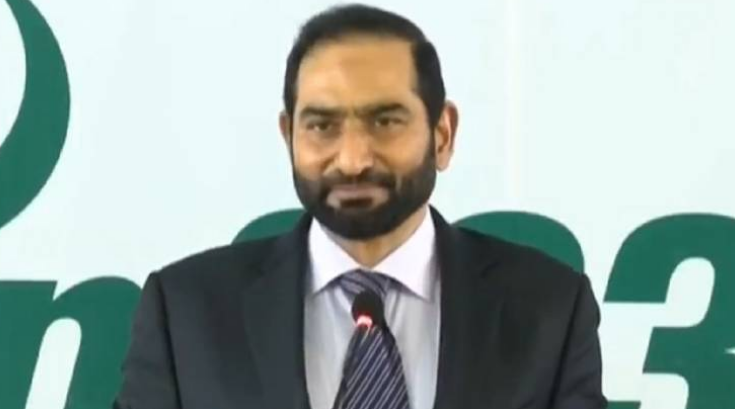
Lahore (Web Desk): Punjab Group Chairman Mian Amer Mahmood has emphasized the urgent need for the creation of new provinces in Pakistan to ensure fair distribution of resources, equal rights for citizens, and stronger governance.
Addressing an awareness seminar titled "Imagine Pakistan 2030: Challenges, Imkanaat aur Nai Rahein" (Challenges, Possibilities and the Way Forward), organised by the Association of Private Sector Universities Pakistan (APSUP) at the at Punjab University’s Institute of Business Administration (IBA), he expressed concern over the prevailing political, social, and administrative conditions in the country, stressing that nations across the world that gave priority to public participation have achieved remarkable success.
The Punjab Group Chairman remarked that while power in the past belonged to kings, today it rests with the people, and this shift has transformed global political and social systems.
Mahmood pointed out the disparity between Pakistan’s rapidly increasing population and its limited number of administrative units.
At independence, he said, the country had four provinces for a population of about 30 million, but today Punjab alone has grown to nearly 130 million residents. By comparison, India has expanded its administrative divisions to 28 states and nine union territories, while other countries such as China, Indonesia, Canada, and Iran have also restructured governance to better manage their populations.
He lamented Pakistan’s poor standing in international development indicators, noting that the country ranks 168th out of 193 nations on the Human Development Index and 140th in achieving Sustainable Development Goals.
He highlighted that nearly half of Pakistan’s children suffer from malnutrition, 25 million remain out of school, and 64 percent of the population consists of youth who face limited employment opportunities, describing this as a serious challenge to the nation’s future.
Drawing attention to Balochistan, Mahmood regretted that despite its natural gas resources, the province continues to lack basic facilities, calling this mismanagement and unequal treatment a major obstacle to national stability.
He argued that creating new provinces would not only reduce administrative costs but also increase development budgets and ensure better representation through more assemblies and chief ministers.
Mian Amer cited the example of dividing Punjab into smaller provinces, which, according to him, would make governance more efficient.
The Punjab Group chief expressed dissatisfaction with the existing political structure, saying it discourages new leadership and remains controlled by a few families. He underlined the importance of giving opportunities to the younger generation and pointed out how local leadership in countries like India and Turkey played a vital role in development.
On the issue of investment, Mian Amer Mahmood said that foreign investors are reluctant to enter Pakistan due to weaknesses in the justice system and the lengthy disposal of cases. He suggested that forming smaller provinces in Balochistan could help end separatist tendencies, drawing a parallel with how administrative divisions in Indian Punjab weakened the Khalistan movement.
He also criticized the reluctance of provinces to transfer authority to local governments and said that the formation of more provinces would naturally strengthen local bodies and improve governance.
Mian Amer Mahmooed stressed that raising awareness among the youth and general public is the most pressing requirement of the present time.
He vowed to continue his efforts to spread this awareness so that people can demand their rights and push for reforms that will secure Pakistan’s future.
It is worth mentioning that Mian Amer Mahmood had also proposed the creation of new provinces in the country at the Superior University on August 20 and the University of Lahore on August 28.
Neo News | Copyright © 2026