Fri, September 18, 2026

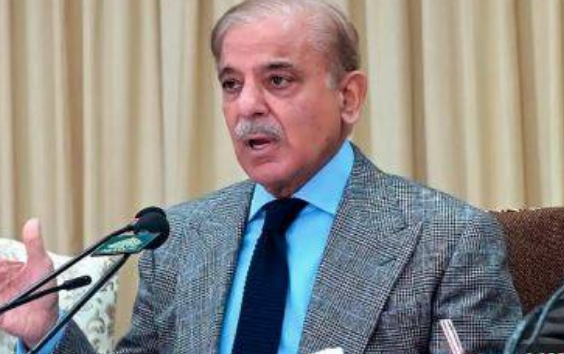
Islamabad (Web Desk): Prime Minister Shehbaz Sharif on Monday led an important meeting that brought together the country’s senior political and military leadership to evaluate the swiftly changing developments in the Middle East, with particular focus on the intensifying strain involving Iran, the United States (US) and Israel.
Sources said the session was attended by top civilian and defence officials, including Chief of Defence Forces (CDF) and Chief of Chief of Army Staff (COAS) Field Marshal Asim Munir, along with key members of the federal government. Participants carried out a thorough assessment of the regional security environment, carefully examining how the ongoing situation could influence Pakistan as well as the wider region.
The discussion largely revolved around the increasingly unstable conditions in the Middle East, where tensions have sharply escalated in recent days. Officials considered a range of possible developments arising from the standoff between Iran, the United States and Israel, and analysed how these scenarios might affect regional harmony and international stability.
According to sources, the meeting also took into account recent diplomatic movements aimed at easing tensions. It was noted that conversations included the possibility of negotiations linked to the conflict, potentially facilitated by Pakistan. While no official statement has been released, the option of Pakistan acting as a host for such talks was part of the broader deliberations.
Participants further reviewed the far-reaching consequences of Middle Eastern instability, particularly its impact on economic conditions and energy security. Given Pakistan’s heavy reliance on imported fuel, officials are closely tracking developments that could disrupt global oil supplies or cause fluctuations in prices.
The internal repercussions of the crisis were also discussed, with authorities evaluating the country’s readiness in case the situation worsens. Energy-related challenges, including maintaining supply and managing rising costs, were examined as part of a broader effort to gauge Pakistan’s economic resilience under evolving geopolitical pressures.
In a separate development, sources indicated that Prime Minister Shehbaz Sharif is due to meet Asif Ali Zardari later in the evening. The meeting is expected to cover similar matters, including tensions involving Iran, the broader Middle Eastern situation, and Pakistan’s domestic energy concerns.
The consultation between the two leaders is also likely to centre on coordinating the government’s response with its coalition partners.
Sources suggested that the shifting security scenario and Pakistan’s possible strategy will be discussed in depth, with particular emphasis on maintaining political cohesion during a time of heightened uncertainty in the region.
Officials added that the leadership intends to keep allied political parties regularly informed about the evolving situation. These engagements are expected to address both immediate security priorities and longer-term strategic planning as Pakistan responds to a complex and rapidly changing geopolitical landscape.
Neo News | Copyright © 2026