Fri, September 18, 2026

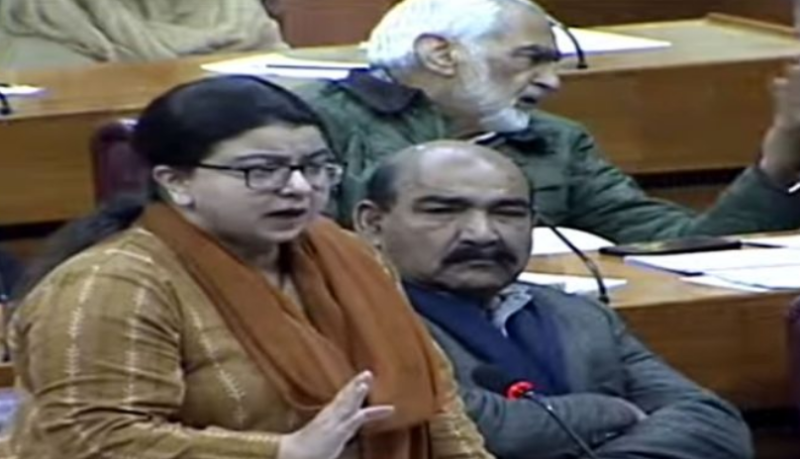
Islamabad (Web Desk): Federal Minister for Information Technology and Telecommunication Shaza Fatima Khawaja on Monday informed the National Assembly (NA) that the federal government has significantly raised the allocation of Balochistan's share in the Prime Minister's Youth Laptop Scheme to 16%, ensuring that students from the province have better access to technology.
She said that in the initial phase of the scheme, 100,000 laptops were distributed, and another 100,000 were made available to students in the subsequent phase.
In the current phase, Prime Minister Shehbaz Sharif personally directed that Balochistan's share be increased to 16%, which goes beyond the province’s proportion based on its population and university enrollment.
Shaza emphasized that this decision reflects the government’s ongoing commitment to supporting students from Balochistan and providing them with enhanced educational opportunities, especially through increased access to technology.
She further explained that the increased quota is part of the government’s larger strategy to ensure balanced development and support underrepresented regions of the country.
The initiative aims to level the playing field by making educational resources more accessible to students in Balochistan, a region that has often faced challenges in terms of technological access and opportunities.
Parliamentary Secretary for Education and Professional Training, Farah Naz Albar, also provided insights into how the laptop distribution process works.
She assured the House that the scheme follows a transparent and merit-based approach.
The process begins with students applying online, after which their applications are verified by designated focal persons at universities.
Once these applications meet the necessary criteria, the Higher Education Commission (HEC) conducts a thorough verification process.
Farah mentioned that if any issues arise during the verification, they are addressed before laptops are distributed to eligible students.
Additionally, if any applicants do not receive laptops, the official website offers a detailed flowchart, guiding students to identify and resolve any potential shortcomings in their applications.
She clarified that the process generally completes within two cycles, ensuring that all successful candidates receive their laptops.
Farah emphasized that the government ensures fairness and equal opportunities for all eligible students, reinforcing the integrity of the entire process.
This ongoing effort underscores the government's resolve to enhance educational equity across the country, particularly in marginalized regions like Balochistan.
Neo News | Copyright © 2026