Fri, September 18, 2026

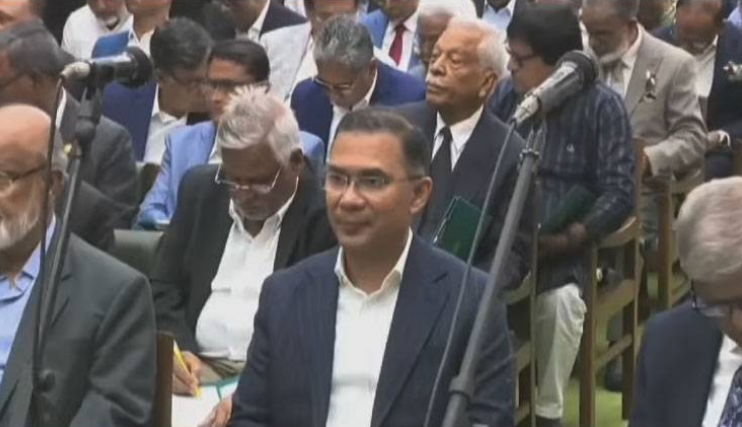
Dhaka (Web Desk): Bangladesh’s prime minister-to-be Tarique Rahman and other lawmakers took oath at a formal ceremony in Dhaka, marking the beginning of a new parliamentary term.
Chief Election Commissioner A M M Nasir Uddin administered the oath to the incoming lawmakers.
Following the oath-taking, members of parliament are set to cast their votes to formally elect the prime minister.
Once the parliamentary vote is completed, Tarique Rahman—son of former prime minister Khaleda Zia—will take the oath of office as prime minister.
The swearing-in ceremony for the prime minister and the new cabinet is expected to draw prominent national and international dignitaries.
Pakistan is being represented at the ceremony by Federal Minister Ahsan Iqbal on behalf of Prime Minister Shehbaz Sharif. During his visit to Dhaka, Iqbal is also scheduled to hold key meetings with senior Bangladeshi officials.
In the recent general elections, the Bangladesh Nationalist Party (BNP) and its allies secured 212 seats, achieving a two-thirds majority in parliament and paving the way for the formation of a new government.
Earlier, interim leader Muhammad Yunus addressed the nation, announcing that the caretaker administration had completed its mandate and cleared the path for an elected government to assume office.
He emphasized that voters and political parties had demonstrated a strong commitment to democratic principles, setting a constructive precedent for the country’s political future.
Yunus congratulated the BNP on its victory and extended his best wishes to Tarique Rahman, expressing hope that the incoming government would safeguard democratic norms, uphold freedom of expression, and protect fundamental rights.
The interim administration had governed the country for nearly 18 months.
During that period, Yunus oversaw the political transition following the end of the government led by Sheikh Hasina, organized general elections, and facilitated a referendum on constitutional reforms reflecting the demands of the younger generation.
Neo News | Copyright © 2026