Thu, September 17, 2026

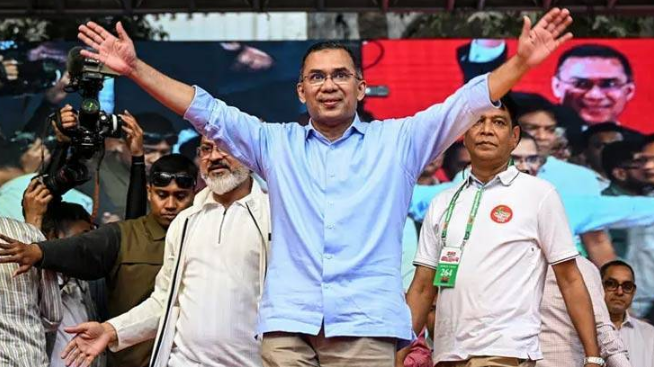
Dhaka (Web Desk/Agencies): Tarique Rahman, the head of the Bangladesh Nationalist Party (BNP), took office as Bangladesh’s new prime minister on Tuesday, marking an important turn in the nation’s political landscape after his party’s sweeping victory in the parliamentary elections.
Rahman 60, son of former prime minister Khaleda Zia and the late president Ziaur Rahman—assumes leadership at a critical juncture.
He faces immediate challenges, from restoring political stability and rebuilding investor confidence to reviving key sectors like the garment industry, which have been shaken by the unrest that followed the Gen Z-led uprising that removed Sheikh Hasina from power in 2024.
For the period leading up to the elections, an interim government under Nobel laureate Muhammad Yunus managed the country’s affairs, ensuring a transitional framework until the new leadership could take over.
Breaking from tradition, the swearing-in ceremony was held outdoors at the South Plaza of the Jatiya Sangsad Bhaban, the national parliament building, rather than at the Bangabhaban, the president’s official residence, which usually hosts such events.
President Mohammed Shahabuddin administered the oaths to Rahman and his cabinet while senior politicians, diplomats, civil and military officials, and foreign representatives from countries including China, India, and Pakistan looked on.
Rahman’s BNP secured a commanding two-thirds majority in parliament, returning to power after nearly twenty years.
In the recent general elections, the BNP and its allied parties collectively won 209 seats, establishing themselves as the largest political bloc in the country.
The Jamaat-e-Islami alliance performed impressively, securing 68 seats, while the new political coalition led by the National Citizens Party claimed six seats.Meanwhile, Hasina’s Awami League was barred from participating after the Election Commission revoked its registration.
Jamaat and its allied parties—including the National Citizen Party, whose youth activists played a pivotal role in the movement that toppled Hasina—will now serve as the opposition in parliament.
Rahman’s rise to the premiership concludes a long and eventful political journey. He returned to Bangladesh last year after 17 years of self-imposed exile in London, arriving just before the passing of his mother.
Though his political career has been marred by allegations of corruption, which he denies, his comeback energized party supporters and became a defining feature of BNP’s campaign.
In his first public statement following the election, Rahman urged restraint and calm. “Peace, law, and order must be maintained at any cost,” he said, cautioning supporters against any acts of retaliation and emphasizing, “We will not tolerate any kind of chaos.”
Representing the Government of Pakistan, Federal Minister for Planning Development and Special Initiatives, Ahsan Iqbal attended the ceremony and extended congratulations to the new Bangladeshi leadership. He expressed Pakistan’s best wishes for strengthening bilateral ties between the two neighboring nations.
Neo News | Copyright © 2026