Fri, September 18, 2026

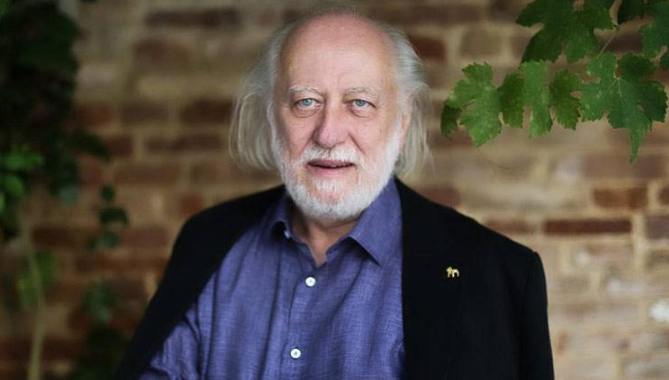
Stockholm (Web Desk): Hungarian author László Krasznahorkai has been named the 2025 Nobel Laureate in Literature, earning the honor for a body of work that captures the darkness of modern existence while celebrating the enduring force of artistic expression.
The Swedish Academy recognized Krasznahorkai “for his compelling and visionary oeuvre that, in the midst of apocalyptic terror, reaffirms the power of art.”
Reacting to the announcement in an interview with Sveriges Radio, the writer said, “I’m very happy, I’m calm and very nervous altogether. It is my first day as a Nobel Prize winner.”
Krasznahorkai rose to literary fame with his 1985 debut novel “Satantango,” a groundbreaking work that brought him national acclaim and remains his best-known creation. The Academy hailed the book as “a literary sensation.”
Describing the new laureate, the Academy noted that he stands as “a great epic writer in the Central European tradition extending through Kafka to Thomas Bernhard,” marked by his use of absurdism and grotesque excess.
It further emphasized that his writing also draws inspiration from his experiences in China and Japan, adopting a more meditative tone influenced by Eastern thought.
Mats Malm, the Academy’s permanent secretary, confirmed that he personally contacted the author in Frankfurt to convey the news. “We have started to discuss the arrangements for December’s ceremony in Stockholm but haven’t gone very far yet,” he said.
Now 71 years old, Krasznahorkai was born into a middle-class Jewish family in Hungary. His early years under communist rule, followed by his relocation to West Berlin in 1987 for a fellowship, deeply informed his worldview and creative style. Known for his demanding prose and sweeping sentences, the author once characterized his approach as “reality examined to the point of madness.”
Academy member Steve Sem-Sandberg explained that it was Krasznahorkai’s unflinching artistic vision—“free of illusion yet firmly grounded in faith in the power of art”—that inspired the committee’s decision.
He becomes only the second Hungarian to receive the Nobel Prize in Literature, following Imre Kertész, who earned the distinction in 2002.
Last year’s recipient was South Korean novelist Han Kang, the first Asian woman to be honored with the prize.
The Swedish Academy, often criticized for favoring Western male authors—only 18 women have been awarded out of 122 laureates since 1901—has pledged to make its selections more inclusive after the #MeToo scandal that rocked the institution in 2018.
The Nobel honor includes a gold medal, a diploma, and a cash prize of $1.2 million. Krasznahorkai will formally receive his award from King Carl XVI Gustaf during a ceremony in Stockholm on December 10, commemorating the death anniversary of Alfred Nobel, the founder of the prize.
Neo News | Copyright © 2026