Thu, September 17, 2026

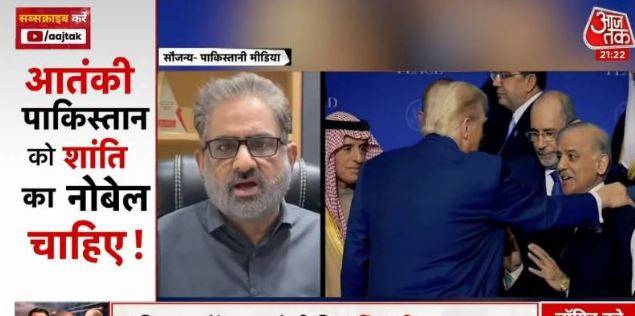
Islamabad / New Delhi (Web Desk): At the beginning of 2026, Pakistan’s diplomatic role in reducing rising global tensions and preventing a potential large-scale conflict has drawn significant international attention, with Islamabad being widely credited for its mediation efforts.
According to diplomatic and political narratives circulating in multiple regions, Pakistan’s leadership has played a key “bridging role” through active shuttle diplomacy between major global and regional powers.
This development has reportedly surprised many international capitals, with discussions from Washington to Beijing acknowledging Pakistan’s role in easing tensions.
The situation has also sparked debate within South Asia, where Indian political and media circles are reportedly reacting strongly to Pakistan’s growing diplomatic visibility.
Observers describe this reaction as a mix of concern and political discomfort over shifting regional perceptions.
In recognition of these alleged peace efforts, there have been growing calls within Pakistan and certain international circles to honor key national figures, including Prime Minister Shehbaz Sharif, Chief of Defence Forces (CDF) and Chief of Army Staff (COAS) Field Marshal Asim Munir and Deputy Prime Minister and Foreign Minister Ishaq Dar, for their roles in promoting diplomatic engagement and regional stability.
Reports also suggest that a resolution introduced in the Punjab Assembly regarding recognition of these efforts has triggered political debate in India, where critics view Pakistan’s rising diplomatic profile as a shift in regional influence.
Meanwhile, Pakistani media and analysts argue that segments of Indian media, often described as “hyper-nationalist,” have responded with criticism toward Pakistani commentators and journalists highlighting Islamabad’s diplomatic role.
Among those mentioned is senior Pakistani journalist and Neo News Executive Director Nasrullah Malik, who has been targeted in Indian media discourse and online commentary due to his coverage of the development.
In India, some opposition politicians are also reported to have criticized the government of Narendra Modi, calling the country’s foreign policy approach ineffective in responding to evolving geopolitical developments. These remarks have added to domestic political debate over India’s role in recent international crises.
Defense and political analysts quoted in Pakistani narratives argue that criticism directed at journalists and analysts reflects deeper disagreements over competing regional narratives.
They further claim that Pakistan’s diplomatic outreach has strengthened its international image as a constructive and stabilizing actor.
Overall, the situation highlights intensifying information warfare and narrative competition between India and Pakistan, alongside broader global discussions about mediation, diplomacy, and regional security in a rapidly changing geopolitical environment.
Neo News | Copyright © 2026