Fri, September 18, 2026

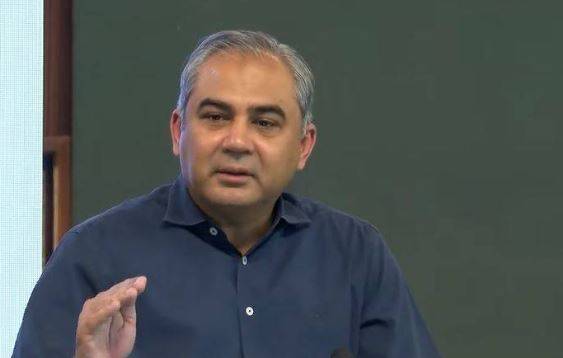
Islamabad (Web Desk): Pakistan’s Interior Minister Mohsin Naqvi on Thursday underscored the need for far-reaching governance reforms and stronger political unity, urging the country’s business leaders to move beyond merely financing election campaigns and instead become active partners in shaping Pakistan’s political and economic future.
Speaking at the Pakistan Economic Summit in Islamabad, Naqvi said the country’s persistent governance issues could only be addressed through comprehensive institutional reforms, greater administrative decentralization and collective cooperation among political forces.
Referring to discussions held during the summit, he noted that participants representing different regions of Pakistan had repeatedly pointed to similar concerns surrounding governance, public service delivery and economic management.
Although Pakistan was gaining greater international recognition and enjoying expanding economic prospects, he said weak governance had consistently prevented the nation from unlocking its true potential.
The interior minister stressed that Pakistan had reached a stage where meaningful reforms could no longer be postponed.
Reaffirming his commitment to democratic principles, he said democracy could only succeed when backed by an efficient and modern administrative system capable of responding to public needs.
Without strengthening institutions, he warned, governments would continue relying on temporary measures that merely dealt with immediate crises rather than solving underlying problems.
Naqvi called on political parties, the business sector and civil society to jointly support the creation of additional administrative units or provinces so that government services, judicial processes and decision-making could become more accessible to ordinary citizens.
He said people should not be forced to travel long distances to reach courts or obtain basic public services, emphasizing that effective local governance was essential for long-term economic progress.
Highlighting the importance of the private sector, he said entrepreneurs possess the leadership and management expertise needed to help overcome complex national challenges.
Rather than restricting their role to funding political campaigns, he encouraged business leaders to participate directly in the political process, arguing that real institutional reform would only gain momentum when the business community collectively demanded change.
Addressing the aspirations of Pakistan’s younger generation, Naqvi said youth were seeking fair employment opportunities, merit-based systems and transparent governance instead of short-term financial assistance.
He cautioned that neglecting these expectations could create significant social challenges, adding that job creation and meritocracy must become central priorities for the country.
The minister also criticized Pakistan’s long-standing dependence on borrowing to finance its annual budgets, saying successive governments had repeatedly chosen debt over implementing structural reforms.
He maintained that even the most dedicated political leadership could not deliver lasting progress unless the country fundamentally restructured its governance framework through broad-based political consensus.
Calling for dialogue across the political spectrum, Naqvi urged all political parties to put aside their differences and work together to redesign Pakistan’s governance model.
He proposed that administrative reform should become a subject of discussion in Parliament, universities, colleges and the media, while the public should ultimately play the deciding role in determining the future direction of the country’s governance system.
While acknowledging Pakistan’s improving international reputation, he said achievements on the global stage would have limited value unless they were matched by stronger governance at home, better access to justice and improvements in education and healthcare.
He described the present moment as a rare opportunity to introduce transformative reforms capable of placing Pakistan on a path towards enduring political stability and sustainable economic growth.
Naqvi reaffirmed his support for the business community, the legal fraternity and other stakeholders working for institutional reform.
He also expressed his readiness to hold separate consultations with representatives from Khyber Pakhtunkhwa and Balochistan on proposals aimed at strengthening peace and stability, stressing that national unity and collective efforts remained essential for securing Pakistan’s future.
Neo News | Copyright © 2026