Fri, September 18, 2026

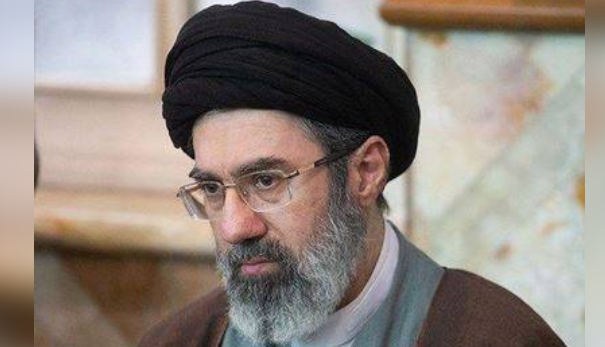
Tehran (Web Desk): Iran’s Supreme Leader Ayatollah Mojtaba Khamenei declared on Thursday that developments unfolding after the outbreak of war involving the United States and Israel against Iran on February 28 were reshaping the future of the Persian Gulf and the Strait of Hormuz.
In a written statement published by Iran’s Press TV, Khamenei said, "Today, with two months having passed since the largest military campaign and aggression by the world's tyrants in the region and the disgraceful defeat of America in its plan, a new chapter for the Persian Gulf and the Strait of Hormuz is being written."
"Today, with two months having passed since the largest military campaign and aggression by the world's tyrants in the region and the disgraceful defeat of America in its plan, a new chapter for the Persian Gulf and the Strait of Hormuz is being written."
— Press TV (@PressTV) April 30, 2026
The Iranian leader stressed that Tehran was determined to safeguard the Gulf region and put an end to what he called foreign interference in the strategic maritime passage. He also highlighted the resilience shown by the Iranian population in standing against outside pressure and military threats.
Khamenei stated that countries bordering the Persian Gulf, which he said had long witnessed their leaders remain silent in the face of aggressors, had now seen the determination of Iran’s naval forces and the Islamic Revolutionary Guard Corps (IRGC), as well as the courage displayed by residents and young people in southern Iran against foreign influence.
"Persian Gulf nations, long accustomed to their rulers' silence before aggressors, have witnessed in the past 60 days the resolve of Iran's naval forces and the IRGC, alongside the zeal and bravery of southern Iran's people and youth in rejecting foreign domination."
— Press TV (@PressTV) April 30, 2026
He further claimed that the Gulf region could move toward a prosperous future without the presence of American forces. Referring to US military facilities in the region, he argued they lacked the capability to secure even themselves, much less offer protection to allied governments.
"America's fake bases do not have the power and ability to provide even their own security, let alone giving hope for providing security for the dependents and America-lovers of the region."
"America's fake bases do not have the power and ability to provide even their own security, let alone giving hope for providing security for the dependents and America-lovers of the region."
— Press TV (@PressTV) April 30, 2026
Khamenei also maintained that a revised framework for administering the Strait of Hormuz would create stability, growth and economic advantages for all regional states.
According to Press TV, he accused Western nations of repeatedly destabilising the area through military actions and interventionist policies.
"The history of repeated aggression by European and American foreigners, the insecurities, losses, and numerous threats to the countries of the region, is only a part of the sinister plans of the world's arrogant powers against the inhabitants of the Persian Gulf region," he stated.
"The history of repeated aggression by European and American foreigners, the insecurities, losses, and numerous threats to the countries of the region, is only a part of the sinister plans of the world's arrogant powers against the inhabitants of the Persian Gulf region."
— Press TV (@PressTV) April 30, 2026
"The legal rules and the new management of the Strait of Hormuz will bring comfort and progress for the benefit of all the nations of the region, and its economic blessings will gladden the hearts of the people."
"The legal rules and the new management of the Strait of Hormuz will bring comfort and progress for the benefit of all the nations of the region, and its economic blessings will gladden the hearts of the people."
— Press TV (@PressTV) April 30, 2026
Separately, Iranian President Masoud Pezeshkian accused both Washington and Israel of being responsible for the continuing tensions and blockade surrounding the Strait of Hormuz.
Speaking in a message released during National Persian Gulf Day and carried by state media, he described the waterway as “a symbol of the great Iranian nation’s resistance.”
Pezeshkian blamed the United States and Israel for instability in the region while defending Iran’s policy of excluding what it termed hostile states from influence over the route.
“The responsibility for any insecurity in this water area lies with the United States and the Zionist regime,” he said.
Meanwhile, the administration of US President Donald Trump is reportedly attempting to form an international alliance intended to restore commercial shipping through the Strait of Hormuz as maritime activity remains heavily disrupted amid rising tensions between Washington and Tehran.
A report published Wednesday by The Wall Street Journal, citing a confidential State Department cable distributed to American embassies, said US diplomats had been instructed to encourage foreign governments to join a proposed coalition known as the "Maritime Freedom Construct." The initiative would reportedly focus on intelligence cooperation, diplomatic coordination and sanctions enforcement aimed at reopening the waterway.
“Your participation will strengthen our collective ability to restore freedom of navigation and protect the global economy,” the cable reportedly says.
According to the newspaper, a senior administration official confirmed that the proposal was among several diplomatic and strategic measures being considered by the White House.
The move comes despite Trump earlier declaring the strait "COMPLETELY OPEN AND READY FOR BUSINESS," while shipping movement through the corridor has continued to face major disruptions.
Reports indicate that Iran has attempted to place mines and target tankers travelling through the route without Tehran’s approval, while the United States has imposed restrictions on vessels linked to Iranian ports.
The future status of the Strait of Hormuz has also emerged as a major obstacle in stalled negotiations between the US and Iran. Reports suggest Trump recently instructed advisers to prepare for a prolonged blockade until Tehran agrees to abandon its nuclear programme.
Meanwhile, Mohsen Rezaei, a senior military adviser to Iran’s supreme leader, warned on Thursday that efforts by Washington to isolate Iranian ports would not succeed. In comments aired on state television, he said Tehran possessed several options to bypass the blockade and cautioned that Iran could respond with direct confrontation if the pressure campaign continues.
Rezaei also discussed possible scenarios in the event of renewed conflict, saying any future war could centre on Iran’s southern coastal regions and extend toward Isfahan, while violence such as bomb attacks and assassinations could also occur in Tehran.
The United States and Israel launched a coordinated military offensive against Iran on February 28, prompting Tehran to retaliate with attacks targeting Israel and regional countries hosting American military assets.
More than 3,300 people were reported killed before Washington and Tehran announced a two-week ceasefire on April 8 through mediation by Pakistan.
Although the truce had initially been scheduled to expire on April 22, President Trump later announced an indefinite extension on April 21 following requests from Pakistani Prime Minister Shehbaz Sharif and Chief of Army Staff (COAS) and Chief of Defence Forces (CDF) Field Marshal Asim Munir.
Neo News | Copyright © 2026