Thu, September 17, 2026

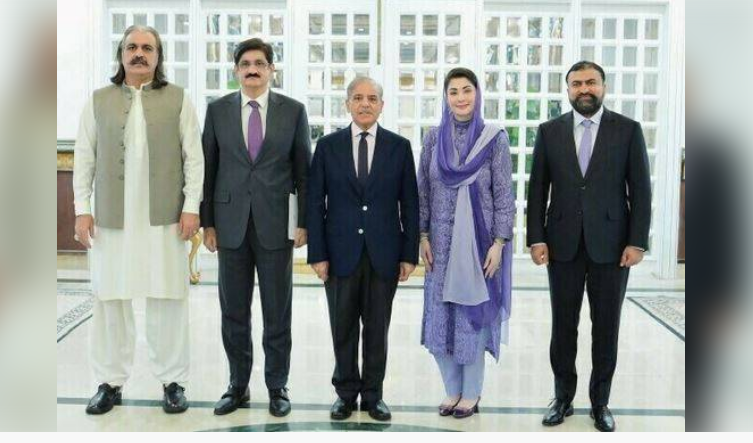
Islamabad (Web Desk): The Council of Common Interests (CCI) has overturned a major federal initiative aimed at constructing new canals, including the controversial Cholistan Canal project.
This decision came during a high-stakes meeting convened earlier than scheduled, following a formal request from the Sindh government.
The move marks a clear reversal of the Executive Committee of the National Economic Council’s (ECNEC) prior approval granted on February 7, 2024, effectively halting the federal plan until all provinces reach a full consensus.
Prime Minister Shehbaz Sharif chaired the meeting, which was originally set for May 2 but held earlier to address growing tensions across Sindh.
The project in question, particularly the construction of six new canals drawing water from the Indus River to irrigate the Cholistan desert, has sparked widespread outrage.
The federal plan, estimated to cost over Rs211 billion, was designed to bring approximately 400,000 acres of barren land into agricultural use. However, political backlash, particularly from the PPP-led Sindh government and nationalist factions, has forced the Centre to reassess its approach.
A statement from the Prime Minister’s Office clarified that the federal government would not proceed with any water infrastructure projects unless there is mutual agreement among all provinces.
It emphasized that Pakistan's water resources must be governed through cooperation and aligned with the foundational principles of the Constitution.
The government reaffirmed that any development in this sector must adhere to the Water Apportionment Accord of 1991 and the Water Policy of 2018, both of which were ratified with full consensus.
The CCI meeting was notably extensive, with 25 attendees invited on special grounds, in addition to its regular members, which include the chief ministers of all four provinces.
Deputy Prime Minister Ishaq Dar, Defence Minister Khawaja Asif, and federal minister Ameer Muqam also attended the meeting.
The council reviewed a six-point agenda, with the canal dispute featuring prominently.
Following the decision, it was also announced that a new body will be constituted to formulate long-term strategies on agricultural and water management.
This committee will include federal and provincial representatives and is tasked with crafting solutions that not only resolve existing disputes but also ensure food and ecological security for the country.
Speaking to media after the meeting, Khyber Pakhtunkhwa (KP) Chief Minister Ali Amin Gandapur confirmed that the plan to construct new canals on the Indus River has been formally withdrawn.
He noted that KP’s three major demands were accepted for inclusion in the agenda of the next CCI session. These include a re-evaluation of the National Finance Commission (NFC) Award and formal recognition of tobacco as an agricultural crop—a move he deemed a significant win for his province.
Defence Minister Khawaja Asif echoed the sentiment during a television interview, asserting that future initiatives involving river water and canal development would only be undertaken with full consensus from all provinces.
He added that the Sindh government had been urged to ensure clearance of road blockades, as the protesters' demands had been addressed.
The Cholistan canal proposal has quickly transformed from a development plan into a flashpoint of political confrontation, revealing deep-seated mistrust between the Centre and provinces.
The controversy has sparked widespread unrest in Sindh, where protests and shutter-down strikes continue in opposition to the construction of six new canals.
The protesters argue that the projects would unfairly affect Sindh’s water share, a concern rooted in the 1991 Water Apportionment Accord that governs distribution of the Indus River’s water among provinces.
The Indus River System Authority (IRSA) is responsible for ensuring implementation of the accord and resolving disputes that arise.
The canal project, part of a broader scheme to revamp irrigation across southern Punjab, was inaugurated on February 15 by Army Chief General Asim Munir and Punjab Chief Minister Maryam Nawaz in the Cholistan region.
Though touted as a major leap forward in agricultural development, the move sparked immediate criticism from various quarters, particularly from Sindh.
The province expressed concerns over potential impacts on its water share, culminating in the Sindh Assembly unanimously opposing the initiative through a resolution passed in March.
Since then, political resistance and grassroots protests intensified, with voices from opposition groups and even allies within the ruling coalition—including the PPP—rallying against the project.
The protesters had raised concerns about fairness in water distribution and the lack of inter-provincial consensus.
Neo News | Copyright © 2026