Thu, September 17, 2026

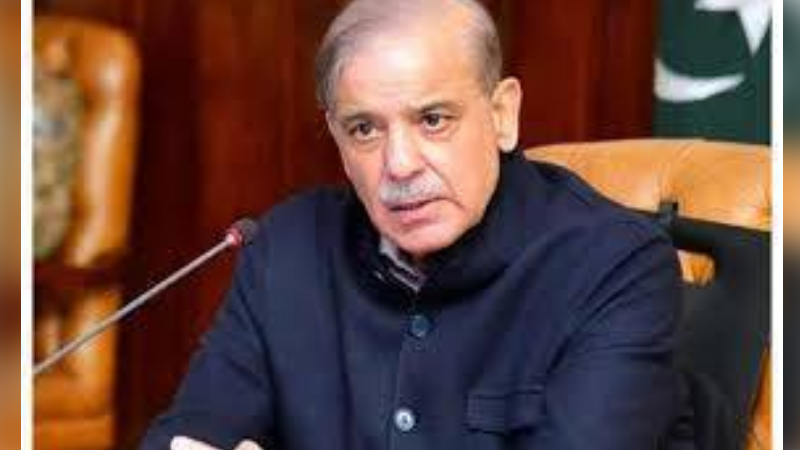
Islamabad (Web Desk): Prime Minister Shehbaz Sharif has called an urgent meeting of the Council of Common Interests (CCI) in Islamabad today to address the ongoing controversy surrounding the construction of new canals on the Indus River.
The meeting, originally scheduled for May 2, was convened earlier at the request of the Sindh government.
According to Sindh Senior Minister Sharjeel Inam Memon, the discussion will focus on resolving provincial concerns over the proposed canal projects.
The meeting will be attended by the chief ministers of all four provinces, as well as federal ministers including Law Minister Azam Nazeer Tarar, Finance Minister Muhammad Aurangzeb, and Health Minister Mustafa Kamal.
This high-level gathering follows the recent decision by PM Shehbaz to suspend all new canal projects until a specially formed committee concludes its review and all provinces reach a mutual agreement.
He reiterated that no decisions would be made unilaterally and that consensus among all stakeholders is essential.
The controversy has sparked widespread unrest in Sindh, where protests and shutter-down strikes continue in opposition to the construction of six new canals.
The protesters argue that the projects would unfairly affect Sindh’s water share, a concern rooted in the 1991 Water Apportionment Accord that governs distribution of the Indus River’s water among provinces.
The Indus River System Authority (IRSA) is responsible for ensuring implementation of the accord and resolving disputes that arise.
Minister Sharjeel Memon also addressed the disruptions caused by ongoing protests, urging political parties and the legal community to help reopen roads.
He warned that the blockade of highways is having a detrimental impact on transportation, the movement of livestock, import and export activities, and the livelihoods of farmers and the poor.
Emphasizing the urgency of the situation, Memon called for immediate action to restore traffic and prevent further economic harm.
He also commended Bilawal Bhutto Zardari for what he described as a successful resolution of the issue, crediting him with a strategic approach that led to a breakthrough.
Memon expressed confidence that the dispute has now been fully resolved and stated that it would be officially closed following today’s CCI meeting.
On April 25, Prime Minister Shehbaz Sharif announced that no new canals will be built without mutual understanding from the Council of Common Interests (CCI).
The decision follows widespread backlash within the country and a wave of uncertainty stirred by India’s abrupt declaration that it would suspend participation in the Indus Waters Treaty (IWT).
Addressing a joint presser with Pakistan Peoples Party (PPP) Chairman Bilawal Bhutto Zardari, the premier confirmed that the federal government would cease any further canal development until all provinces agree.
Speaking on the occasion, Bilawal Bhutto had expressed gratitude that the government had acknowledged the concerns raised by the public and the PPP.
He welcomed the decision to defer canal construction and voiced optimism about a constructive outcome from the upcoming CCI session.
The canal project, part of a broader scheme to revamp irrigation across southern Punjab, was inaugurated on February 15 by Army Chief General Asim Munir and Punjab Chief Minister Maryam Nawaz in the Cholistan region.
Though touted as a major leap forward in agricultural development, the move sparked immediate criticism from various quarters, particularly from Sindh.
The province expressed concerns over potential impacts on its water share, culminating in the Sindh Assembly unanimously opposing the initiative through a resolution passed in March.
Since then, political resistance and grassroots protests have intensified, with voices from opposition groups and even allies within the ruling coalition—including the PPP—rallying against the project.
Demonstrators have raised concerns about fairness in water distribution and the lack of inter-provincial consensus.
Neo News | Copyright © 2026