Fri, September 18, 2026

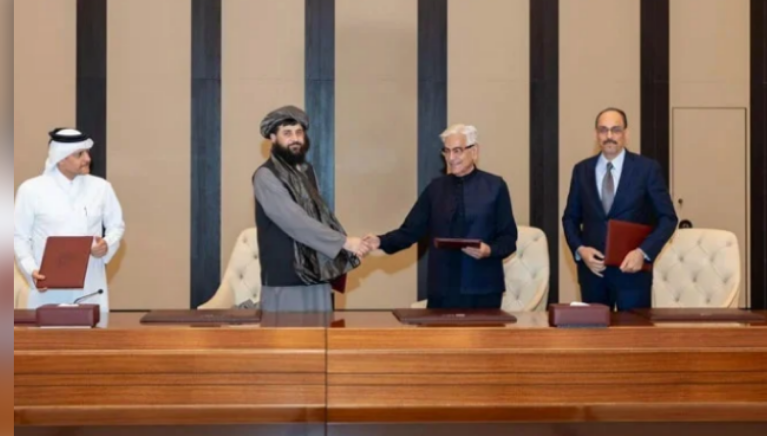
Istanbul (Web Desk): A final attempt is being made to keep the fragile dialogue between Islamabad and Kabul alive, as diplomatic and security channels struggle to overcome what officials describe as the Afghan Taliban’s “rigid stance.”
According to senior security sources on Tuesday, efforts are ongoing to prevent the collapse of the process despite growing frustration on both sides.
The latest round of negotiations began in Istanbul on Saturday, marking the second phase of discussions between Pakistan and Afghanistan.
It followed earlier talks in Doha on October 18 and 19, jointly mediated by Qatar and Turkiye, which had succeeded in establishing a permanent ceasefire after a series of fierce border clashes.
Those Doha meetings came in the aftermath of intense fighting along the frontier and Pakistani airstrikes targeting the Gul Bahadur group’s camps inside Afghanistan.
The agreement reached there extended an initial 48-hour truce and paved the way for the current Istanbul talks aimed at creating a mechanism for lasting peace.
A senior security source revealed that discussions on the third day continued for almost 18 hours, during which the Afghan Taliban delegation repeatedly agreed to Pakistan’s “logical and legitimate” demand for decisive action against the Tehreek-i-Taliban Pakistan (TTP) and other militant elements.
However, the source said that the Afghan representatives later reversed their position after receiving “direct instructions from Kabul.”
Officials blamed what they called “irrational and unlawful advice from Kabul” for derailing the progress achieved during the marathon talks.
Despite the setbacks, Pakistani officials and mediators emphasized that both sides were trying to handle the complex issues with seriousness and patience.
They confirmed that a “last-ditch effort” was still underway to find a breakthrough through dialogue, even as the Taliban delegation continued to resist.
Sources familiar with the closed-door discussions said that most matters had been resolved except for one crucial point—the framework for verifying action against militant groups based in Afghanistan, particularly the outlawed TTP.
Earlier on Monday, the mood in the meeting had been described as positive, with participants referring to “encouraging progress” and “constructive engagement.”
But by the evening, optimism had faded as the Afghan delegation refused to commit in writing to verifiable measures to end support for the TTP.
Officials noted that while the mediators from Qatar and Turkiye fully understood Islamabad’s position, the leadership in Kabul and Kandahar remained reluctant to make binding commitments.
Another participant described the situation as “a difficult phase,” reflecting growing frustration within the negotiating team.
Members of the Afghan delegation, however, maintained that continued tensions would benefit no one and voiced hope for a peaceful resolution.
Mediators also expressed cautious optimism, saying that the fact both sides had stayed engaged for three consecutive days was, in itself, an encouraging sign.
Monday’s relatively constructive exchanges were a sharp contrast to the tense atmosphere on Sunday, when Pakistan had presented its final stance. “Islamabad has made it clear that the Taliban’s ongoing patronage of terrorist groups is unacceptable,” a senior security official stressed.
Neo News | Copyright © 2026