Wed, September 16, 2026

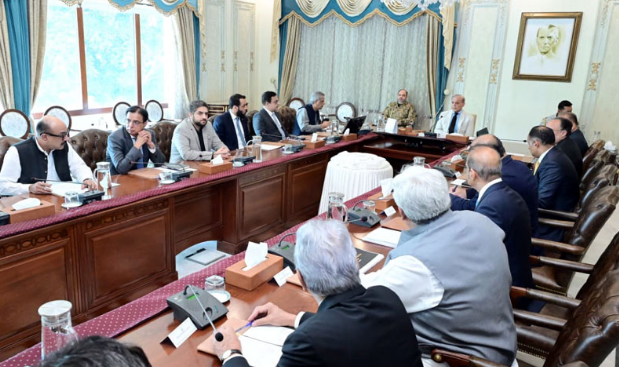
Islamabad (Web Desk): Prime Minister Shehbaz Sharif on Friday called for faster implementation of the government’s tax reforms, directing the relevant institutions to meet the prescribed deadlines while stepping up the crackdown on tax avoidance, smuggling and unlawful commercial operations.
The prime minister issued the directives while presiding over a weekly meeting in Islamabad focused on the Federal Board of Revenue’s (FBR) reform programme.
PM Shehbaz ordered an independent third-party review of the reforms to ensure that the process remained transparent, efficient and sustainable.
He said the transformation of the FBR was being built around digital technology, production oversight and automated processes.
The premier was also briefed on the restructuring of Pakistan Revenue Automation Limited (PRAL). He said the government’s tax reform agenda was ultimately aimed at supporting national development.
PM Shehbaz welcomed the appointment of recognised goods evaluators within the FBR and commended the board’s chairman and his team for advancing the initiative.
The prime minister stressed that the reform programme must translate into practical improvements, particularly by modernising the tax machinery, raising government revenues and bringing smuggling to an end.
Officials provided a comprehensive briefing on the FBR’s ongoing initiatives, with particular attention given to PRAL’s reorganisation, the digital transformation of taxation and measures being introduced to curb the illegal movement of goods.
The meeting was told that development work was progressing on IRIS 3.0, a redesigned tax operating framework and a central data hub. These initiatives are intended to connect different parts of the tax system and make its operations more modern, coordinated and dependent on reliable data. International experts have been engaged to develop IRIS 3.0.
Officials said a related project was also being fast-tracked to strengthen tax administration, test an automated taxation model and eventually incorporate artificial intelligence and machine learning to improve revenue collection.
Participants were informed that PRAL had also appointed new senior officials in several key fields, including technology, data protection, operational management and taxation.
The meeting examined the results of the faceless assessment mechanism introduced in the customs sector. Officials reported that the average revenue generated from each Goods Declaration (GD) rose by 12% between January and June 2026.
The mechanism had also made it easier for authorities to detect and keep track of irregularities linked to imports.
Officials said the hiring process for 280 goods evaluators was close to completion. Meanwhile, arrangements were underway to establish a Central Assessment Unit in Islamabad.
The facility is scheduled to begin functioning on an interim basis by December 31, 2026, before moving to a new complex where it is expected to become fully operational by June 2027.
The meeting was further informed of a major rise in digital invoicing activity.
Transactions conducted through digital invoicing stood at PKR 236 billion in July 2025, but the figure surged to PKR 2.5 trillion by July 2026.
Authorities have set a goal of reaching PKR 4 trillion in digital invoicing transactions by December this year.
Turning to efforts against petroleum smuggling, officials outlined several steps taken to restrict the unauthorised movement of fuel.
These measures include digitally mapping legitimate petrol stations through GIS tagging, using GPS technology to monitor petroleum shipments, linking the enterprise resource planning systems of oil marketing companies with tracking arrangements, and creating a central tracking application for law enforcement bodies.
The meeting was told that the Rahguzar application had already contributed to the closure of 2,500 illegal petrol stations.
Authorities have also started legal proceedings in relevant cases, while further work is underway to digitally monitor petroleum sales and introduce additional safeguards against illegal trade.
The meeting was attended by Federal Ministers Azam Nazeer Tarar, Dr Musadik Masood Malik, Ahad Khan Cheema, Muhammad Aurangzeb, Attaullah Tarar and Shaza Fatima Khawaja, Minister of State Bilal Azhar Kayani, Member of the National Assembly Usman Owaisi, State Bank Governor Jameel Ahmad, the FBR chairman and other senior officials.
Neo News | Copyright © 2026