Fri, September 18, 2026

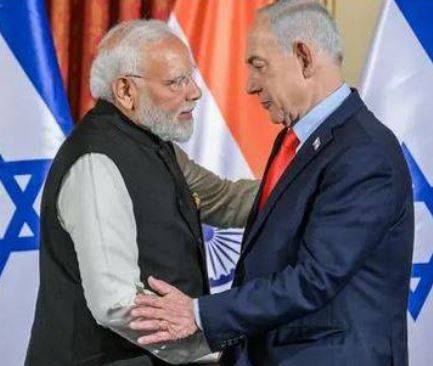
New York / New Delhi (Web Desk): In a strongly worded report, The New York Times has criticized the foreign policy of Indian Prime Minister Narendra Modi, particularly highlighting India’s growing ties with Israel.
The report describes these policies as potentially harmful to India’s economy and public interests.
According to the publication, the Modi government’s alleged “covert alignment” with Israel against Iran has placed India in a difficult geopolitical position.
It notes that rising tensions and conflict in the Middle East, especially in the Gulf region, are beginning to negatively impact India’s economic stability.
The report further states that increasing instability in the region has disrupted trade routes and energy supplies, posing serious challenges for India, which relies heavily on imports. It suggests that India’s strategic choices may be undermining its own economic interests while contributing to regional uncertainty.
Additionally, the article claims that by backing Israel, India risks straining its relations with Iran—an important trade and energy partner.
This shift, according to the report, could lead to higher energy costs and supply chain disruptions, placing further pressure on the Indian economy.
The New York Times also points out that these developments are exposing contradictions in India’s foreign policy, as economic challenges begin to affect ordinary citizens.
Rising fuel prices and trade uncertainties are cited as early signs of the broader impact.
While the report presents a critical perspective, there has been no immediate official response from the Indian government regarding these claims. Observers note that the evolving situation in the Middle East could have far-reaching consequences for countries like India that maintain strategic ties across the region.
Neo News | Copyright © 2026