Fri, September 18, 2026

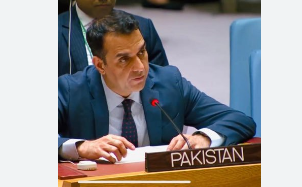
New York (Web Desk): Pakistan has called for renewed diplomatic efforts to end the growing conflict between Sudan’s rival military factions, while ensuring that humanitarian aid can reach those in need and supporting a political process fully led and owned by Sudanese authorities.
Addressing the United Nations Security Council (UNSC) on Monday, Ambassador Usman Jadoon, Pakistan’s deputy permanent representative, said there is no military solution to the crisis and emphasized Pakistan’s commitment to dialogue and diplomacy, as well as its unwavering support for Sudan’s sovereignty, unity, and territorial integrity.
Sudan has been engulfed in violence since April 2023, when former allies—the Sudanese Armed Forces (SAF) and the Rapid Support Forces (RSF) militia—turned on each other in a struggle for power.
What started as a rivalry has grown into widespread bloodshed, with the Darfur region suffering the most. The area, already scarred by longstanding ethnic tensions and past allegations of genocide, has seen some of the most horrific violence in recent months.
Opening the debate, International Criminal Court Deputy Prosecutor Nazhat Shameem Khan described the crisis as having worsened dramatically over the past six months. She detailed a repeated pattern of mass atrocities across Darfur, including collective torture, rape, arbitrary detention, executions, and mass burials.
“The scale of suffering in town after town is shocking,” she said, warning that such crimes continue to unfold daily.
Ms. Khan outlined ongoing investigations into atrocities in West Darfur and in the city of El Fasher, which RSF fighters captured in October 2025. She cited evidence, including video, audio, and satellite data, confirming war crimes and crimes against humanity.
In some footage, RSF fighters are seen celebrating executions and desecrating corpses. Her office is also reviewing evidence from 2023 in El Geneina, noting that the patterns of violence there are now being repeated in El Fasher. She warned that the criminality will persist as long as the conflict continues and perpetrators act with impunity.
The ICC has achieved significant milestones in its Darfur case, including its first conviction resulting from a Security Council referral and the first conviction for gender-based persecution. In late 2025, Ali Muhammad Ali Abd-Al-Rahman, also known as Ali Kushayb, a senior commander of the notorious Janjaweed militia, was indicted for crimes against humanity and sentenced to 20 years in prison.
Ms. Khan also noted that she had hoped to brief the Council in person but was denied a visa, urging states not to obstruct the Court’s work.
She highlighted the importance of international support for investigations despite political tensions, referencing U.S. sanctions against ICC officials over inquiries related to Israel, which the United States considers illegitimate.
Ambassador Jadoon stressed that the atrocities in West Darfur, El Geneina, and El Fasher cannot go unpunished. He commended Sudan’s cooperation with the ICC, underlining that accountability must balance national sovereignty with international justice. Strengthening Sudan’s own justice institutions, he said, is crucial for ensuring credible and sustainable accountability that resonates locally.
“The people of Sudan deserve peace, justice, and dignity,” he said, warning that the ICC’s authority and credibility depend on impartiality and fairness. “Selectivity and double standards erode trust,” he added, emphasizing the need for objective and non-discriminatory enforcement of international justice.
Neo News | Copyright © 2026