Thu, September 17, 2026

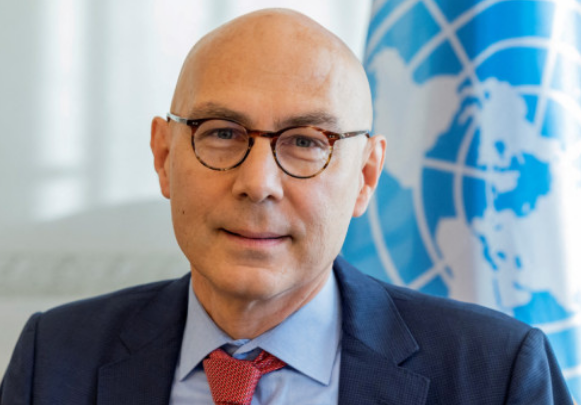
Nairobi (Web Desk): Sudan is facing an unprecedented crisis, with the United Nations High Commissioner for Human Rights, Volker Turk, warning that the country is sliding into “an abyss of unimaginable dimensions.”
He stressed that safeguarding human rights must be at the forefront of all efforts to end the fighting and build a lasting peace.
Speaking from Nairobi, Kenya, on Sunday after a five-day visit to Sudan, Turk said “a chronicle of cruelty is unfolding before our very eyes,” nearly three years after clashes erupted between the Sudanese Armed Forces (SAF) and the Rapid Support Forces (RSF).
In a briefing to journalists in the Kenyan capital, he appealed to “all those who have any influence, including regional actors and notably those who supply the arms and benefit economically from this war” to take urgent action to halt the conflict.
Reflecting on his previous visit to Sudan in November 2022, Turk recalled being deeply inspired by civil society, particularly the young people and women who spearheaded the 2018 revolution.
He said that while the ongoing civil war between the two factions of the Sudanese military government has “plunged the country into an abyss of unfathomable proportions,” affecting the entire nation, “the spirit of the struggle for peace, justice and freedom…is not broken.”
“I bore witness in Sudan to the trauma of the unspeakable brutality that people have suffered – but also to the resilience and defiance of the human spirit,” he said.
During his mission, Turk met with a wide range of society, including young volunteers who deliver aid to their communities “often in the face of massive bureaucratic hurdles, risking detention and violence.” One volunteer explained, “The price of war is being paid by young people. Sudanese young people are at the frontlines of this war, serving those who are in need of humanitarian aid.”
Turk drew attention to attacks on essential civilian infrastructure, such as the Merowe dam and hydroelectric power station, which once supplied 70 percent of the country’s electricity.
He noted that these sites have been repeatedly targeted by RSF-launched drones in recent weeks, emphasizing that such attacks are serious violations and can amount to war crimes.
He urged both warring sides to “cease intolerable attacks against civilian objects that are indispensable to the civilian population, including markets, health facilities, schools and shelters.”
The UN rights chief also visited displaced families from the besieged city of El Fasher in North Darfur, now living in Al Afad camp, some 1,200 kilometers away.
He recounted harrowing personal tragedies, including a four-year-old who lost his hearing in bombardment and a three-year-old who had not smiled since the attack.
He shared the story of one woman who “saw her husband and only son killed” and remains bedridden from grief, trauma, and a bullet wound she sustained while trying – in vain – to shield her son.
Turk also highlighted the testimony of Aisha, 20, who was fleeing El Fasher on a donkey cart in October when armed men on camels forced the women off. Her brother was shot while trying to intervene, and her mother pleaded to be taken instead of the children. Aisha recalled, “They hit her, took me and told me to keep quiet or they would kill my mother. Then what happened…happened. My period has not come since then.”
On the widespread use of sexual violence, Turk said that in Sudan, “women and girls’ bodies have been weaponized.” He stressed that sexual violence is being systematically used as a tool of war, which is also a war crime.
He also reported widespread summary executions, pointing out that all parties to the conflict “have perpetrated gross violations and abuses of international human rights law and serious violations of international humanitarian law, notably when the fighting intensifies to control new areas.”
He expressed alarm that atrocities previously committed in El Fasher could recur in the Kordofan region, where fighting has escalated since late October. This comes amid famine conditions in Kadugli and the threat of food shortages in other areas, including Dilling.
Turk condemned the widespread acquisition of advanced weaponry, especially drones, across Sudan, saying “it is despicable that large sums of money are being spent on procuring increasingly advanced weaponry – funds that should be used to alleviate the suffering of the population.” He also raised concerns about the militarization of society, including the arming of civilians and recruitment of combatants by all parties.
Concluding his visit, Turk called on the warring sides to protect civilians and civilian infrastructure, allow safe passage for people fleeing conflict zones, and ensure uninterrupted delivery of humanitarian aid.
He also highlighted additional priorities, such as “humane treatment of detainees, accounting for and establishing the fate of missing persons, and releasing civilians detained for alleged ‘collaboration’ with the opposing party.”
The UN rights chief repeated his earlier plea, saying, “I urge all those involved to set aside entrenched positions, power games, and personal interests, and to focus on the common interests of the Sudanese people.”
“Again, I leave with a plea that human rights be central to building confidence and bringing this war to an end, to resuming the difficult task of building a sustainable peace,” Turk concluded. He acknowledged the challenge but added, “This is difficult, but certainly not impossible, with the resilience and power of the Sudanese people.”
Neo News | Copyright © 2026