Thu, September 17, 2026

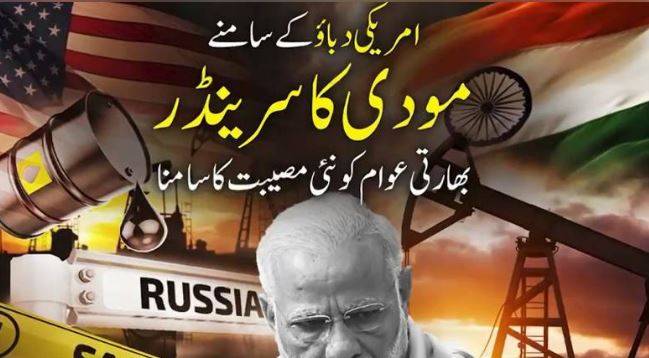
New Delhi / Washington (Web Desk): India’s long-standing claim of maintaining an “independent foreign policy” is facing renewed scrutiny after recent developments involving U.S. sanctions on Russian oil, raising concerns about economic and strategic implications for the country.
According to a report by NDTV, the United States has formally withdrawn the waiver that had allowed India to continue purchasing Russian crude oil despite ongoing sanctions on Moscow.
This decision has created significant uncertainty for Indian policymakers and energy companies, particularly because Indian refineries had already placed large orders—estimated at around 30 million barrels of Russian oil—which are now at risk of disruption.
Industry experts say the move could have immediate and far-reaching consequences. Over the past few years, India had significantly increased its reliance on discounted Russian oil, which helped keep domestic fuel prices relatively stable despite global volatility.
With this supply channel now under threat, India may be forced to turn to more expensive alternatives from the Middle East or other markets, potentially increasing import costs.
Analysts warn that any sustained disruption in Russian oil supplies could translate into higher fuel prices across India.
This would not only affect transportation and industrial costs but could also trigger broader inflationary pressures, impacting essential goods and services. Lower- and middle-income households are expected to feel the brunt of such increases.
From a geopolitical perspective, the development highlights the delicate balance India has tried to maintain between its strategic partnership with the United States and its economic ties with Russia.
Critics argue that the latest move exposes the limitations of India’s foreign policy independence, while others view it as a pragmatic adjustment to shifting global realities.
The situation also poses a reputational challenge for New Delhi on the global stage, as it navigates competing pressures from major powers.
How the government responds—whether by securing alternative energy deals, negotiating further concessions, or adjusting domestic pricing policies—will be critical in determining the overall economic impact in the coming months.
Neo News | Copyright © 2026