Fri, September 18, 2026

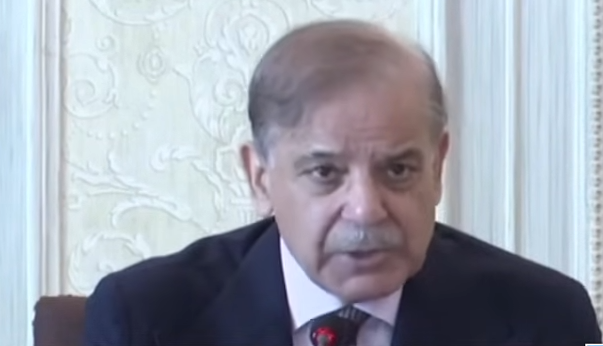
Islamabad (Web Desk): Prime Minister Shehbaz Sharif has stated that Pakistan is willing to initiate discussions with the Taliban government in Afghanistan under fair and acceptable conditions, as both sides observe a 48-hour temporary ceasefire.
Addressing a federal cabinet meeting to review the situation along the Pakistan-Afghanistan border, he said that now the ‘ball is in the Taliban regime's court’ for a permanent ceasefire.
PM Shehbaz said that the Taliban regime carried out the recent attack on Pakistan under Indian influence, noting that the attack took place during Afghan Foreign Minister Amir Khan Muttaqi’s visit to India.
Taliban fighters and the India-backed Tehreek-e-Taliban Pakistan (TTP), also known as Fitna al-Khawarij, launched an unprovoked offensive against Pakistan on Sunday. The Pakistan Armed Forces responded strongly, killing more than 200 Afghan Taliban members and their allied militants in a defensive counterattack. The military’s media wing reported that 23 Pakistani soldiers embraced martyrdom in the confrontation.
Following a request from the Taliban regime and through mutual agreement, both countries decided to enforce a temporary ceasefire for 48 hours starting October 15.
PM Shehbaz said that despite Pakistan’s repeated attempts to promote peace, the Taliban government in Afghanistan opted for hostility instead of reconciliation. He said Pakistan had been compelled to respond forcefully as patience had worn thin after repeated incidents of cross-border terrorism.
The prime minister pointed out that Deputy Prime Minister Ishaq Dar, Defence Minister Khawaja Asif, and other senior officials made several trips to Kabul to convey Islamabad’s consistent message of peace and regional development.
Relations between the two neighbouring states remain tense as the interim Afghan government continues to resist taking action against militant networks operating from its territory, despite an upsurge in terrorist attacks across Pakistan.
Since the Taliban regained control of Afghanistan in 2021, Pakistan has faced a sharp rise in cross-border terrorism, particularly in the provinces of Khyber Pakhtunkhwa and Balochistan.
The two countries share an approximately 2,500-kilometre-long porous frontier with numerous crossings that serve as vital links for trade and social interaction between communities on both sides.
Nevertheless, the issue of terrorism continues to dominate Pakistan’s concerns, with Islamabad urging Kabul to prevent militant groups like the TTP from using Afghan soil to launch attacks inside Pakistan.
These concerns were substantiated in a United Nations Security Council (UNSC) report by the Analytical Support and Sanctions Monitoring Team, which outlined the coordination between the Taliban regime and the TTP, including logistical, financial, and operational support.
Pakistan has hosted Afghan refugees for more than four decades—from the Soviet invasion through the Taliban’s return to power in 2021—and still shelters many who were born and raised on its soil.
According to media reports, since April 2025, over 554,000 Afghans have returned to their country under Pakistan’s Illegal Foreigners Repatriation Plan, including around 145,000 who repatriated in August following a crackdown on those without legal status.
Regarding the agreement in Gaza, PM Shehbaz hailed the cessation of hostilities and violence in Gaza as a significant accomplishment, crediting it to the determined efforts of US President Donald Trump and the collaborative role of countries including Pakistan, Türkiye, and Qatar.
He reaffirmed that Pakistan will persist in extending its moral and diplomatic support to the people of Palestine and Kashmir in their pursuit of fundamental rights.
Moreover, prime minister lauded economic team for achieving a Staff-Level Agreement with the International Monetary Fund (IMF).
Highlighting the importance of sustainable economic growth, he stressed that Pakistan must strive to ensure this becomes the final IMF programme in its history.
Neo News | Copyright © 2026