Thu, September 17, 2026

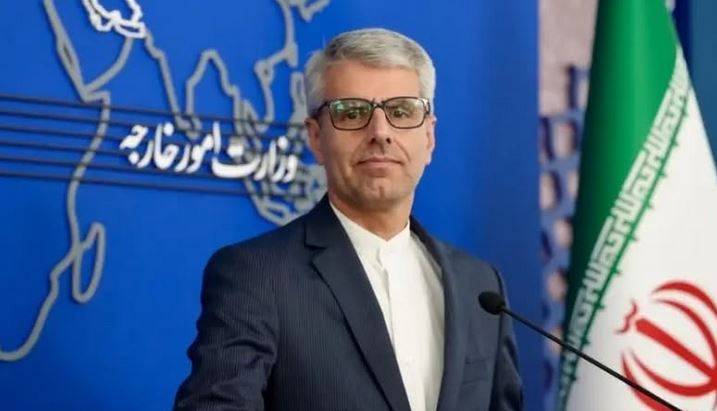
Tehran (Web Desk): Iran has said that ending the conflict in Lebanon is “part and parcel” of memorandum of understanding (MoU) currently being finalised with the United States (US), describing it as an important step toward reducing broader regional hostilities.
During a press briefing, Iranian Foreign Ministry spokesperson Esmaeil Baghaei stated that Lebanon has been directly included in the draft agreement, stressing that safeguarding its sovereignty and territorial integrity is part of the interim understanding.
He said that Tehran has already demonstrated willingness to support a ceasefire in Lebanon and will continue to use all available means to ensure that all parties honour their commitments.
Baghaei’s comments followed Iran’s announcement that progress had been made in talks with Washington after months of heightened tensions across the region.
He pointed out that the draft MoU references Lebanon on three separate occasions, which he said highlights its central role in preserving the country’s security, unity, and independence.
The spokesperson further explained that halting fighting in Lebanon is “part and parcel” of the agreement, adding that Iran considers it inseparable from wider efforts aimed at ending the regional conflict.
He said Iran has already shown seriousness regarding a Lebanese ceasefire and would continue to closely observe developments on the ground.
Baghaei added Tehran will also rely on all available instruments whenever necessary to ensure that other parties comply with the terms of the agreement.
The Iran’s foreign ministry spokesperson also referred to recent Israeli airstrikes in Beirut’s Dahiyeh neighbourhood, condemning the killing of a senior Hezbollah commander along with civilians, and said Iran’s policy decisions are based on national interest and that such attacks would not derail diplomatic efforts.
Baghaei described the emerging understanding as the outcome of what he called Iran’s 110-day period of resistance during the confrontation, while criticising the actions of the United States and Israel throughout the crisis.
He also recalled earlier strikes on Iran, including attacks targeting nuclear facilities, and said Tehran would continue pursuing legal recourse through international forums.
The spokesperson added that the agreement includes economic components such as sanctions relief, access to frozen Iranian assets, and support for reconstruction efforts.
He emphasised that the release of Iran’s blocked funds is a central element of the deal, insisting that these assets are legally owned by Iran and should not be viewed as a concession, adding that mechanisms have been arranged to address the matter.
Reconstruction-related compensation has also been incorporated into the MoU, which he said is an important issue for Iranian citizens, and added that Tehran would continue seeking accountability for wartime destruction.
Baghaei further stated that the US would be required to lift both primary and secondary sanctions, along with relevant United Nations Security Council (UNSC) measures and resolutions linked to the International Atomic Energy Agency’s Board of Governors.
He also said that permissions allowing unrestricted exports of Iranian crude oil, petroleum products, and petrochemicals would come into effect immediately after the official signing, which is expected to take place on Friday.
The spokesperson noted that Iranian officials are expected to undertake a regional tour before the final signing process, with further details to be announced later, while adding that the final schedule for the signing ceremony will be confirmed within the next 48 days.
Responding to questions about whether the agreement represents a renewed friendship between Tehran and Washington, Baghaei rejected the idea, pointing instead to decades of mistrust between the two countries.
He said the deal should instead be seen as an attempt to reduce tensions and bring an end to a long-running regional confrontation.
Baghaei added that the agreement enjoys wide backing within Iranian state institutions, including approval from the Supreme National Security Council, and praised key figures involved in the negotiations such as Parliament Speaker Mohammad Bagher Ghalibaf and Foreign Minister Abbas Araghchi.
He also spoke about the Strait of Hormuz, saying Iran and Oman would coordinate arrangements to ensure safe passage through the strategic waterway. The Iranian foreign ministry spokesperson added that safety mechanisms would be established in consultation with Oman and other relevant parties.
Baghaei clarified that Iran does not intend to impose arbitrary transit charges, but suggested that a regulated fee system could be introduced for navigation services, environmental protection, and maritime insurance.
Addressing the possibility of violations, he said that the US would be held accountable for ensuring compliance, arguing that any breach by regional allies would ultimately reflect a failure by Washington to uphold the agreement.
The Iranian foreign ministry spokesperson while diplomatic engagement is progressing, Iran will continue pursuing legal action related to the conflict and will not abandon claims tied to what it considers unlawful acts.
Neo News | Copyright © 2026