Thu, September 17, 2026

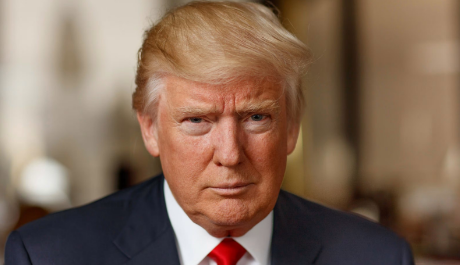
Washington (Web Desk): US President Donald Trump has indicated that negotiations between Washington and Tehran may restart within the next couple of days, suggesting that the United States is inclined to return to Islamabad for further engagement.
Speaking to the New York Post, he remarked that developments could unfold quickly, saying, “You should stay there, really, because something could be happening over the next two days, and we’re more inclined to go there.”
The US president added, “we’re more inclined to go” to Pakistan.
“It’s more likely, you know why? Because the Field Marshal is doing a great job. He’s fantastic, and therefore it’s more likely that we go back there,“ he was quoted as saying. “Why should we go to some country that has nothing to do with it?”
Trump’s remarks come against the backdrop of reports that US and Iranian negotiating teams could return to Islamabad later in the week after holding a round of talks over the weekend in the Pakistani capital.
The talks, facilitated by Pakistan, represented the highest-level direct interaction between the two sides since 1979. Although the meeting concluded without a formal agreement, it also did not collapse, with both delegations departing Islamabad on Sunday.
According to officials sources cited by Reuters, Islamabad has been actively coordinating with both sides regarding the scheduling of the next round of discussions, which may take place over the weekend.
A senior Pakistani official also stated, “We have reached out to Iran and we got a positive response that they will be open to a second round of talks,” indicating Tehran’s willingness to continue engagement.
Diplomatic channels remain active, with intermediaries working to bring both sides back to the table. These efforts reportedly involve support from Türkiye and Egypt, while Pakistan continues to play a central facilitating role. The immediate objective, according to officials, is to preserve the fragile ceasefire and prevent escalation.
On Monday, Prime Minister Shehbaz Sharif informed the federal cabinet that efforts to resolve the situation were continuing at full pace, stressing the importance of dialogue. He noted, “As I am talking to you, matters that are not resolved, full efforts are underway to resolve them.”
Meanwhile, President Asif Ali Zardari was briefed by PM Shehbaz on diplomatic developments, including his upcoming visits to Saudi Arabia and Turkiye aimed at advancing peace efforts, as well as updates on the Iran-US dialogue.
The briefing also covered “for further engagement to promote peace efforts” and “all aspects of the dialogue,” according to an official statement from the President’s Secretariat.
The ceasefire between the US and Iran, initially brokered on April 8 after weeks of confrontation, is set to expire on April 22. While it remains technically intact, it is increasingly viewed as fragile. Tensions have also risen following US moves toward enforcing a naval blockade of Iranian ports, a step Tehran has warned would violate the agreement.
Pakistan has intensified its diplomatic outreach following the Islamabad talks as Deputy Prime Minister and Foreign Minister Ishaq Dar held a series of calls with international counterparts, including Britain’s Yvette Cooper, China’s Wang Yi, Türkiye’s Hakan Fidan, Saudi Arabia’s Prince Faisal bin Farhan, and Egypt’s Badr Abdelatty, reinforcing the message that all sides must maintain the ceasefire and return to negotiations.
Diplomatic observers say these engagements have helped shape a broad, informal understanding among key stakeholders to keep the diplomatic process alive ahead of the April 22 deadline.
Efforts are now focused on either extending the ceasefire or shifting toward technical-level discussions that could prepare the ground for a renewed political round.
Since the Islamabad meeting, intermediaries have continued exchanging messages between Washington and Tehran on unresolved issues, with discussions also exploring the possibility of extending the truce by at least 45 days. However, differences persist between the two sides regarding the agenda, format, objectives, and venue of the next round of talks.
Neo News | Copyright © 2026