Thu, September 17, 2026

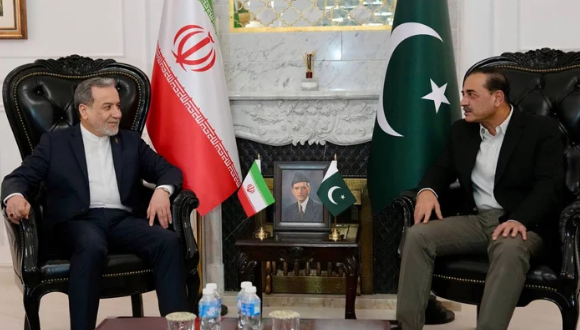
Islamabad (Web Desk): Iran’s Foreign Minister Abbas Araghchi on Saturday met with Chief of Army Staff (COAS) and Chief of Defence Forces (CDF) Field Marshal Syed Asim Munir in Islamabad on Saturday, the Embassy of Iran said.
H.E. Dr Seyyed Abbas Araghchi, Honorable Foreign Minister calls on Field Marshal Seyed Asim Munir, NI(M), HJ, COAS & CDF pic.twitter.com/sihS0yB3NJ
— Embassy of IR Iran Pakistan (@IraninIslamabad) April 25, 2026
Interior Minister Mohsin Naqvi and other officials were also present during the meeting.
The Iranian delegation included Deputy Foreign Minister Kazem Gharibabadi, Ambassador Reza Amiri Moghadam and Foreign Ministry Spokesperson Esmaeil Baqaei.
As part of his visit, Araghchi is expected to separately meet Prime Minister Shehbaz Sharif and Deputy Prime Minister and Foreign Minister Ishaq Dar to exchange views on regional developments and efforts aimed at sustaining peace and stability.
The Iranian delegation arrived in Islamabad late Friday night, where they were received by senior Pakistani officials including Ishaq Dar and Asim Munir, according to the Foreign Office.
Officials stated that the visit is focused on consultations regarding the evolving regional situation and ongoing diplomatic initiatives.
Iranian media reported that Araghchi’s trip forms part of a three-nation tour covering Islamabad, Muscat, and Moscow. It added, "The purpose of this visit is to hold bilateral consultations and discuss current developments in the region, as well as the latest situation in the war imposed by the United States and the Israeli regime against Iran."
Meanwhile, Washington is also moving forward with diplomatic engagement. Special envoy Steve Witkoff and presidential adviser Jared Kushner are scheduled to travel to Pakistan for another round of discussions with Iran aimed at ending the conflict.
Confirming the development, White House Press Secretary Karoline Leavitt said, "I can confirm Special Envoy Witkoff and Jared Kushner will be off to Pakistan again tomorrow morning to engage in talks."
She further noted that Vice President JD Vance remains prepared to travel if required but will not be making the trip for now, adding, "Everyone will be on standby to fly to Pakistan if necessary."
Sources revealed that a US logistics and security team has already arrived in Islamabad ahead of the expected second round of negotiations, a development attributed to key behind-the-scenes efforts by Pakistan’s mediation team.
The conflict in the Middle East escalated on February 28, when the United States and Israel carried out a large-scale surprise offensive against Iran despite ongoing negotiations between Washington and Tehran at the time.
A ceasefire facilitated by Pakistan came into effect on April 8, followed by an initial round of talks in Islamabad earlier this month that lasted 21 hours. These discussions marked the first direct interaction between senior US and Iranian officials in over ten years, and the highest-level contact since the Iranian Revolution.
During those talks, both sides addressed a range of critical issues, including tensions surrounding the Strait of Hormuz, Iran’s nuclear programme, and sanctions imposed on Tehran. However, uncertainty remains over the next phase of dialogue as disagreements persist regarding proposed actions in and around the Strait.
Following the February escalation, Iran closed the Strait of Hormuz and carried out retaliatory strikes against Israeli positions and US military bases in the region.
Although Tehran briefly reopened the waterway on April 17 citing a ceasefire between Lebanon and Israel, it shut it again a day later in response to a US naval blockade of Iranian maritime trade, which it views as an act of war.
Despite rising tensions, Pakistan has continued its diplomatic efforts to bring both sides back to the negotiating table and extend the fragile ceasefire.
Just hours before the truce was due to expire on April 22, US President Donald Trump announced an extension, explaining, "I was acting at the request of Pakistan to hold off attacks until Iranian leaders and representatives could come up with what he called a unified proposal."
Neo News | Copyright © 2026