Thu, September 17, 2026

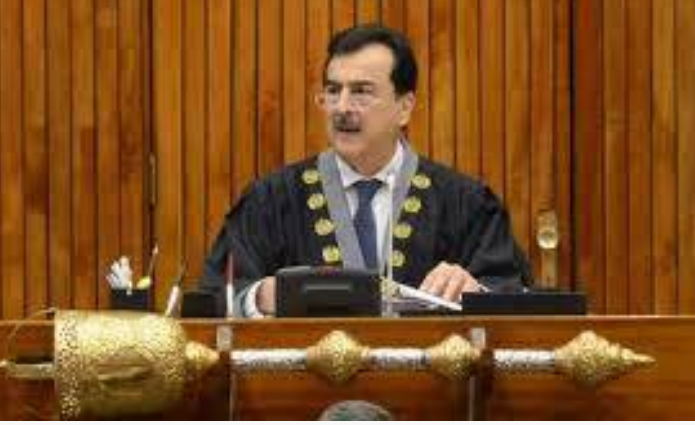
Islamabad (Web Desk): The Senate on Thursday gave its final approval to the 27th Constitutional Amendment Bill, 2025, which had earlier cleared the National Assembly, following the exclusion of five clauses and modifications to three others from a total of 59 before adoption.
The legislation, introduced by Minister for Law and Justice Azam Nazeer Tarar, went through a detailed two-step voting process—first by division and then clause by clause.
In its final shape, the bill saw the removal of clauses 4, 19, 22, 51, and 55, while clause 53 and its related sub-clauses were revised and reintroduced as part of the Senate’s effort to refine the proposed constitutional changes.
During deliberations, Senators Syed Ali Zafar of Pakistan Tehreek-e-Insaf (PTI) and Kamran Murtaza of Jamiat Ulema-e-Islam–Fazl (JUI-F) voiced opposition to the bill, contending that two defecting members of their parties, who had already announced their resignations, were not entitled to participate in the voting process.
Responding to their objections, Law Minister Azam Nazeer Tarar acknowledged the legal credentials of both senators but underscored that the scope of Article 63-A must remain confined to constitutional interpretation.
He clarified that party references against lawmakers are valid only under three specific circumstances: when a member votes contrary to party policy in the election of a Prime Minister or Chief Minister, during a vote of no confidence, or on a finance or constitutional amendment bill.
Tarar further explained that a party head may issue a formal declaration against a member, which the presiding officer forwards to the Election Commission of Pakistan for a hearing, and that the affected member retains the right to appeal directly to the Supreme Court.
He maintained that a legislator cannot be deemed disqualified solely for disagreeing with a vote, cautioning against distorting constitutional provisions for political advantage.
He reiterated that under Article 63-A, the declaration, hearing, and final verdict rest entirely with the Election Commission, and until the process concludes, the member legally continues to serve in the House.
The law minister emphasized the importance of upholding the Constitution both in letter and spirit, warning that parliamentary norms must not be weakened through selective readings of the law.
Leader of the House Senator Muhammad Ishaq Dar told the chamber that the changes sent back by the National Assembly amounted to “corrections and clarifications.”
Addressing the concerns raised, he acknowledged Senator Ali Zafar’s legal expertise but noted that constitutional debates must consider historical and political context, reminding that some of those now citing procedural flaws had once “brushed aside rules within minutes” during a no-confidence vote, asserting that “two wrongs do not make a right.”
Dar clarified that seven of the eight returned amendments were of a technical nature, while one significant revision strengthened Article 6, explicitly barring any court—including the proposed Federal Constitutional Court, the Supreme Court, or the High Courts—from endorsing or validating any attempt to abrogate or subvert the Constitution.
He emphasized that constructive legislative debate requires patience and continuity, observing that senators who missed committee sessions could have addressed technical matters during those discussions.
Concluding the debate, Ishaq Dar thanked both government and opposition benches for their participation, remarking that the 27th Constitutional Amendment had now completed its passage through both Houses of Parliament, marking the culmination of a key constitutional development.
Neo News | Copyright © 2026