Thu, September 17, 2026

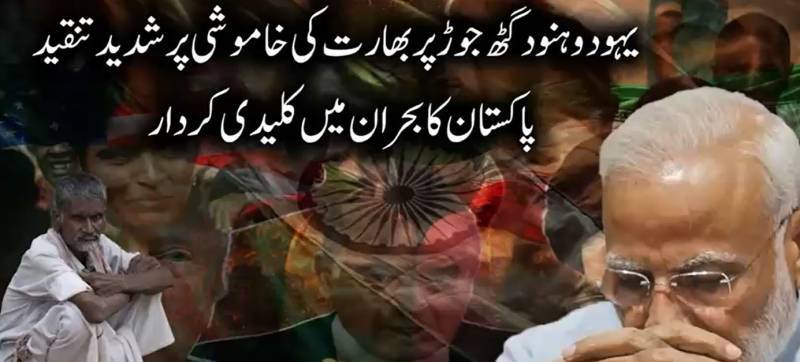
Washington /New Delhi (Web Desk): Pakistan’s active and constructive diplomatic role in promoting peace in the Middle East has, according to recent commentary, drawn global attention while raising fresh questions about India’s foreign policy positioning.
A report published by the US-based magazine ‘The National Interest’ has sharply criticized the diplomatic approach of the Modi government, describing it as uncertain and increasingly defensive amid shifting regional dynamics.
The report suggests that New Delhi’s silence over the escalating tensions between Iran and Israel has triggered a series of questions both domestically and internationally.
It argues that India’s ambiguous and cautious policy stance has contributed to growing political pressure within the country, while simultaneously weakening its perceived diplomatic influence abroad.
In contrast, the commentary highlights Pakistan’s emergence as a more active diplomatic participant, portraying it as a state that has strategically positioned itself as an engaged and facilitative actor in regional peace efforts.
It notes that while India has largely appeared as a passive observer in recent developments, Pakistan has sought to strengthen its diplomatic outreach and present itself as a constructive interlocutor on key international issues.
The report further claims that Pakistan’s involvement in facilitating communication channels between Tehran and Washington has reinforced its image as a responsible regional stakeholder, while India’s efforts to maintain balanced relations with multiple sides have yielded limited diplomatic dividends.
Meanwhile, senior opposition leader and former diplomat Shashi Tharoor of the Indian National Congress has also acknowledged shortcomings in India’s foreign policy approach.
He is quoted as saying that Pakistan is performing better than India on the diplomatic front, particularly in complex regions such as the Middle East, where Pakistan’s clear and peace-oriented stance stands out, while India’s policies appear increasingly uncertain and inconsistent.
Analysts further note that India’s attempt to simultaneously balance relations with both Israel and Iran has not produced the desired strategic outcomes and may have contributed to a perception of diplomatic hesitation in parts of the Arab world as well.
Overall, diplomatic observers argue that these developments reflect a shifting balance of influence in South Asian diplomacy, where Pakistan is increasingly being viewed as more proactive and strategically engaged, while India faces growing scrutiny over the coherence and clarity of its foreign policy direction.
Neo News | Copyright © 2026