Fri, September 18, 2026

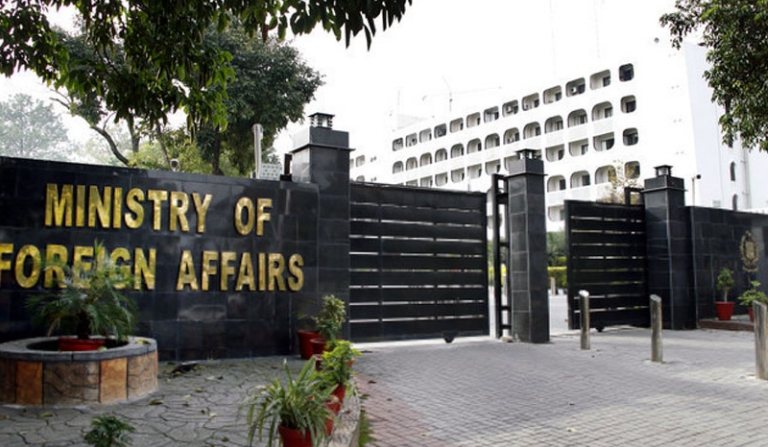
Islamabad (Web Desk): Pakistan has expressed satisfaction with the recent ruling delivered by the Court of Arbitration regarding the interpretation of the Indus Waters Treaty (IWT)
According to the Foreign Office (FO), the decision, which was issued on August 8 and made publicly available on the Court’s official website today, addresses fundamental questions about the design parameters for India's proposed run-of-river hydroelectric projects on the Western Rivers — namely the Chenab, Jhelum, and Indus — that are allocated to Pakistan under the Treaty.
PR NO.2️⃣3️⃣7️⃣/2️⃣0️⃣2️⃣5️⃣
— Ministry of Foreign Affairs - Pakistan (@ForeignOfficePk) August 11, 2025
Pakistan Welcomes the Award Rendered by the Court of Arbitration on the Issues of General Interpretation of the Indus Waters Treaty (IWT).
⬇️https://t.co/fzmDYpXbYj pic.twitter.com/fNkbnDwyrv
In a key conclusion, the Court affirmed that India is obligated to allow the uninterrupted flow of these rivers for Pakistan’s use, except in narrowly defined circumstances explicitly permitted by the Treaty.
The judgment clarified that any exceptions, such as those related to hydropower generation, must strictly adhere to the conditions outlined in the Treaty itself, and not be based on what India may interpret as optimal engineering practices or international standards.
The ruling also addressed specific technical aspects of project design, including the use of low-level outlets, the construction of gated spillways, turbine intake configurations, and freeboard requirements.
The Court’s interpretation in these areas aligns closely with Pakistan’s longstanding reading of the Treaty’s provisions. Furthermore, it restricts India from expanding the pondage capacity of these projects beyond what is allowed under the Treaty framework.
Significantly, the Court reiterated that its awards are conclusive and binding on both parties — India and Pakistan — and that they serve as a legal benchmark for any future deliberations by similar forums, whether by a Court of Arbitration or by Neutral Experts.
Acknowledging Pakistan’s position as the downstream riparian state, the Court emphasized that the Treaty’s core objective regarding the Western Rivers is to clearly define the entitlements and responsibilities of both countries, while also fostering bilateral cooperation and offering a reliable mechanism for dispute resolution.
This ruling gains added importance in light of India’s recent unilateral move to suspend its participation in the implementation of the Treaty, along with its earlier decision to disengage from the arbitration process entirely. Pakistan views the Award as a strong reaffirmation of its consistent stance on the matter.
Reaffirming its dedication to the full execution of the Indus Waters Treaty, Pakistan has called upon India to restore the normal functioning of the Treaty and to honour the decision rendered by the Court of Arbitration without delay.
Neo News | Copyright © 2026