Thu, September 17, 2026

Islamabad (Web Desk): Pakistan has strongly criticized India, highlighting its ongoing policies of coercion, targeting of minorities, and extrajudicial actions, while insisting that “no amount of posturing can mask India’s role in undermining peace, fueling terrorism in Pakistan, and meddling in the affairs of neighboring countries.”
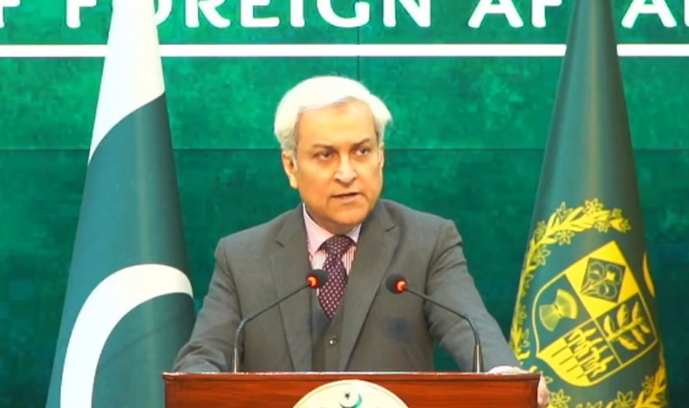
During his weekly briefing, Foreign Office spokesperson Tahir Andrabi said New Delhi’s focus on Pakistan does not hide its own record as a consistent source of regional instability. He accused India of carrying out extrajudicial killings abroad, interfering in the internal politics of nearby countries, and exporting terrorism into Pakistan.
He also said India’s dealings with smaller neighbors often lean toward coercion rather than cooperation, while minorities within its borders face growing intimidation and repression.
Responding to a recent statement by India’s External Affairs Minister targeting Pakistan, Andrabi described it as “an obvious attempt to divert attention from newly surfaced evidence showing that India sought a third country’s intervention to secure a ceasefire during the May conflict.”
The spokesperson also condemned the demolition of the Faiz-e-Elahi mosque in India, framing it as part of a deliberate effort by the RSS-BJP nexus to erase Muslim heritage, citing the destruction of the Babri Mosque in 1992.
He warned that other historic mosques could face similar threats and called on the United Nations and the global community to pay serious attention to the rise of Islamophobia, hate speech, and violence against Muslims in India.
He further highlighted India’s continued suppression of Kashmiri leaders and media outlets, noting the increasing number of political prisoners and outlawing of political activities. Arbitrary detentions, harassment, and cordon-and-search operations, Andrabi said, have become routine in occupied Kashmir.
He criticized India’s unilateral moves of August 5, 2019, calling them a clear attempt to strengthen illegal occupation through demographic engineering and to systematically disenfranchise Kashmiris, in violation of international law and the right to self-determination.
Turning to Afghanistan, he reiterated Pakistan’s call for a formal assurance from the Afghan Taliban that their groups and nationals will not carry out terrorist attacks inside Pakistan.
Despite the absence of such guarantees, he emphasized that Pakistan remains ready to engage constructively with Afghanistan through bilateral and multilateral forums, including the trilateral framework with China, underlining that “any nation’s basic responsibility is to prevent its nationals from participating in terrorism abroad.”
Andrabi confirmed that Pakistan’s embassies and consulates continue regular diplomatic exchanges. He also expressed optimism about ongoing Pakistan-Bangladesh-China consultations aimed at fostering regional and sub-regional cooperation for peace, progress, and prosperity.
On Iran, he reiterated Pakistan’s opposition to the use of force or the imposition of sanctions, stressing that Pakistan has consistently avoided interfering in other nations’ internal affairs. He also reaffirmed Pakistan’s firm position on Somaliland and Somalia, rejecting recognition of Somaliland by Israel or any attempts to divide Somalia.
This stance has been consistently maintained at national and international platforms, including the OIC and UN Security Council, and was reflected in joint statements by foreign ministers from African and Middle Eastern countries.
Regarding China, he underscored Pakistan’s commitment to safeguarding Chinese nationals working on key economic projects and ensuring that such initiatives continue to benefit both countries’ economies.
He reaffirmed that the Indus Waters Treaty remains a binding agreement and that all projects on the three rivers are under scrutiny.
Andrabi also updated the media on Deputy Prime Minister and Foreign Minister Ishaq Dar’s diplomatic engagements, including visits and calls with foreign ministers from Myanmar, Indonesia, Egypt, Malaysia, Turkey, UAE, Saudi Arabia, and Bangladesh. These discussions focused on regional developments, bilateral cooperation, and the importance of dialogue and diplomacy in addressing international issues.
The highlighted growing economic ties with Azerbaijan, noting that Azerbaijani Economy Minister Mikayil Jabbarov and DPM Dar discussed a US$2 billion investment in Pakistan. Both sides agreed to finalize the framework to channel Azerbaijani funds into specific sectors of the Pakistani economy.
Neo News | Copyright © 2026