Fri, September 18, 2026

By: Nausher Bilal
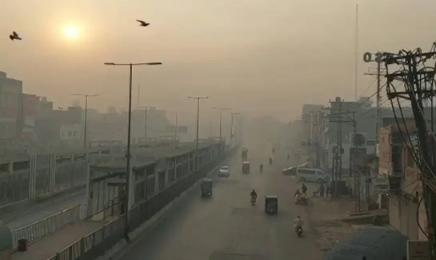
Lahore’s smog pollution has become a recurring annual phenomenon, which shows little evidence of improvement.
As of November 2025, Lahore is again hovering at the top of the IQAir rankings for the most polluted cities in the world. This level is designated as “hazardous” by IQAir, a Swiss air quality technology company, which also reports that “Overall, Pakistan air pollution caused the country to be ranked as the second most polluted in the world with an annual PM2.5 average of 73.7μg/m³.” (IQAir).
Thus, in 2024, Pakistan's average was over 14 times worse than the World Health Organization's (WHO) recommended annual limit of 5 μg/m³.
The issue of pollution in Pakistan was brought to light first in 2017, when accurate air quality data was first published. This quickly evolved into a widely discussed concern amongst the population, and became a persistent topic for media outlets.
There are numerous factors that contribute to smog, including industrial emissions, vehicular emissions, brick kilns, and waste burning among others.
Due to it being a hub for agriculture, farmers in Lahore and its surrounding regions in the Punjab province engage in the burning of crop residue specifically in the months October through December. This practice, coupled with seasonal weather patterns that trap pollutants near the ground, further exacerbates the air quality in winter months.
Research into this matter showed that there was approximately a 150% increase in these events in 2021 from the previous year (Goheer et al.).
As the population grows and demand for agricultural services increases, crop burning practices are only expected to increase in the near future, further worsening this crisis.
Smog has detrimental effects across education, public health, transportation, and the economy.
Environmental health experts at the University of Punjab found a decrease in lung capacity of 40% due to haze occurrence, which mostly affected people with respiratory and cardiovascular diseases (Iram et al.).
Additionally, newborn children are more susceptible to developing respiratory diseases such as asthma and bronchitis due to bad air quality.
Moreover, low visibility caused by smog in the winter season causes frequent closures of educational institutions along with flight delays and traffic congestion, slowing down everyday life.
During the peak smog season, the local government has to enforce strict curfews on businesses in hopes of limiting vehicular emissions, leading to loss of revenue and a lowered standard of living.
For Lahore to break free from this cycle of worsening smog, policymakers have to move beyond temporary measures and establish long term solutions.
A 2019 policy brief found that investment in Lahore’s Bus Rapid Transit system resulted in a sizable shift from private vehicles to public transport.
Specifically, it highlighted an approximate 30% increase in public transport use. (Majid et al.). This underlines the need for increased investment in public transport to curb vehicular emissions.
Furthermore, the government needs to implement strict regulations to limit or even ban crop burning. Farmers can be incentivised to do so through the provision of subsidies for crop residue management and introducing fines.
Research and development to shift brick kilns to cleaner technologies will also help reduce emission of harmful greenhouse gases that contribute to the smog.
On the other side of these statistics, pollution has become a deeply personal issue for the citizens of Lahore. Every winter, families have to give face masks to children and use air purifiers that most can barely afford.
Outdoor labourers such as street vendors, traffic cops, and rickshaw drivers are forced to breathe dangerous air for extended periods of time. They often have to deal with burning eyes, constant coughs, and shortness of breath.
Dense populations surrounding industrial areas are also at greater risk. Many resort to organizing neighborhood campaigns, demanding inspections in hopes of saving their communities.
Parents and social media groups regularly monitor daily AQI values to determine whether it's safe for children to g to school or even play outside.
For many families, smog is no longer just an environmental issue. It is an unavoidable matter which impacts their day-to-day lives and wellbeing.
Lahore’s smog crisis calls for collective action, involving all policymakers, residents, communities, and institutions.
These various stakeholders may organize public awareness campaigns, school-led initiatives, and community-level efforts. All of which can play a role in pressuring the authorities and shifting to cleaner practices.
The population has already shown resilience and adaptability, though they should not have to live in fear of the air they breathe.
With better policy, cleaner technologies, and civic engagement, Lahore can still break this destructive cycle.
Disclaimer: The views and opinions expressed in this article are solely those of the author and do not necessarily reflect the official policy or position of neo news.pk 
Nausher Bilal is a Freshman at Dickinson College in Carlisle, PA, USA.
Neo News | Copyright © 2026