Fri, September 18, 2026

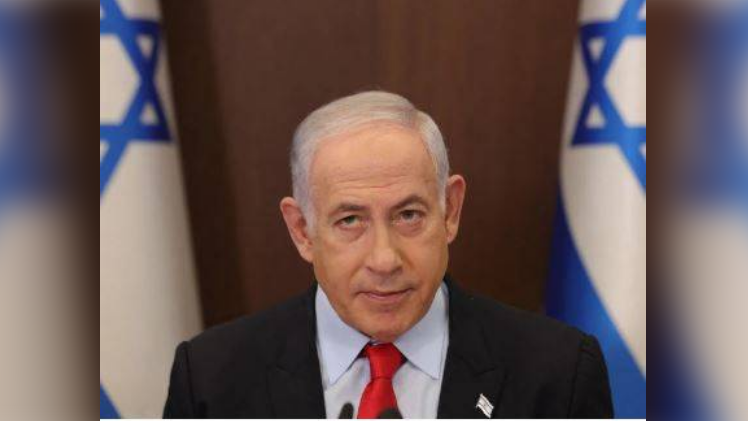
Jerusalem/New Delhi (Web Desk/Agencies): In a statement that has stirred fresh controversy across diplomatic circles, Israeli Prime Minister Benjamin Netanyahu has reportedly acknowledged Israel’s role in supporting India during a recent military campaign targeting Pakistan.
His remarks have triggered concern amid already heightened tensions between the two South Asian nuclear rivals following a brief but intense military escalation earlier this year.
The remarks, made during a meeting with Indian Ambassador JP Singh in Jerusalem, touched on expanding bilateral ties in both defense and economic sectors. However, Netanyahu went further than expected by commenting on Israel’s defense technology being used in actual combat.
“Our weapons were used, and they worked perfectly,” Netanyahu is reported to have told a group of Indian journalists, as cited by Indian media sources.
While he did not elaborate on operational specifics, the statement was interpreted as a confirmation of Israeli involvement in what has been referred to in Indian media as Operation Sindoor—a four-day offensive launched by India in May in response to a deadly militant attack on tourists in Kashmir’s Pahalgam region.
India had blamed Pakistan for orchestrating the attack, a charge Islamabad vehemently denied. The Indian military campaign, which reportedly involved both aerial and ground assaults, targeted sites New Delhi labeled as “terrorist infrastructure” across the border.
Among the Israeli military hardware said to have been used were HARPY loitering munitions—often referred to as "suicide drones"—and the Barak-8 surface-to-air missile system, which was co-developed by Israeli and Indian defense firms.
Though India has previously acquired a range of advanced Israeli defense technologies, this instance appears to be the first time Israeli officials have publicly acknowledged their systems being used in a live conflict involving India and Pakistan.
The confirmation has drawn sharp attention from international observers, raising questions about the evolving nature of Israel’s defense partnerships beyond the Middle East.
Adding to the intensity of the revelation, Israel’s Consul General in Mumbai defended the operation, calling it “an act of self-defence” and expressing pride in his country’s contributions.
In recent years, India and Israel have rapidly expanded their defense collaboration, moving beyond simple procurement to joint development and strategic alignment. Bilateral defense trade is estimated at around $2.9 billion, encompassing everything from precision-guided munitions to radar systems and unmanned aerial vehicles.
This latest disclosure, however, marks a new and potentially destabilizing chapter in the regional balance of power.
With relations between India and Pakistan already fragile, Israel’s public admission of military backing to India has introduced a new layer of geopolitical complexity in South Asia—one that could have lasting implications.
Neo News | Copyright © 2026