Fri, September 18, 2026

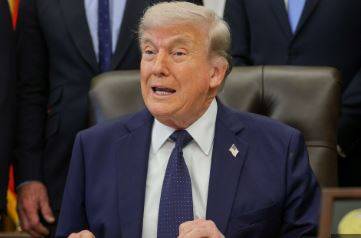
Washington (Web Desk): United States (US) President Donald Trump on Thursday said that he would be“ honoured” to meet Iran’s newly appointed Supreme Leader, Ayatollah Mojtaba Khamenei, but only if the United States and Iran succeed in reaching a formal agreement.
Addressing reporters at the White House, Trump clarified that he does not currently seek such a meeting, though he would consider it appropriate under the right diplomatic circumstances.
He suggested that a potential encounter would depend entirely on the outcome of ongoing negotiations between the two countries, saying it could happen if a deal is finalised and, in that case, would be a matter of respect.
When asked about the possibility of a direct discussion with the Iranian leadership, Trump reiterated that he was not actively pushing for it but would not dismiss the idea if circumstances aligned. He also noted that the suggestion of such a meeting had not originated from him, though others had floated the possibility.
Responding to questions about regional security, Trump warned that if Iran were to be responsible for the killing of US troops in the region, it would prompt a swift and forceful response from Washington.
He described such an outcome as a serious trigger for military action, indicating that the US would react quickly in that scenario.
He further stressed that any agreement with Tehran would require a firm commitment to abandoning nuclear weapons ambitions, underscoring that preventing Iran from obtaining nuclear capability remains the central condition of US policy in the negotiations.
Trump also spoke about maritime tensions, stating that the Strait of Hormuz would be reopened as part of any settlement. He added that the United States had already conducted extensive operations to secure the area, including efforts to clear potential mines, and claimed that advanced capabilities were in place to ensure safe passage.
Addressing domestic political considerations, Trump said his decisions regarding Iran were not influenced by electoral calculations, insisting that he simply focuses on what he believes is right, regardless of public opinion.
He also referenced previous military actions, arguing that unpopular decisions in the past, including operations related to Venezuela, eventually improved his political standing after results were achieved.
His remarks come at a time when Washington and Tehran are still attempting to turn a fragile ceasefire into a broader and more durable agreement following months of conflict that began in late February with joint US and Israeli strikes on Iran.
Since then, both sides have suffered significant casualties, with thousands reportedly killed and continued retaliatory attacks across the region.
Iran has carried out counterstrikes targeting Israel and US allies in the Gulf, and tensions escalated further with disruptions in the Strait of Hormuz.
Although a ceasefire was reached in April through mediation efforts involving Pakistan, follow-up talks held in Islamabad failed to produce a lasting resolution. Diplomatic efforts have nevertheless continued in search of a more stable and comprehensive agreement.
Neo News | Copyright © 2026