Thu, September 17, 2026

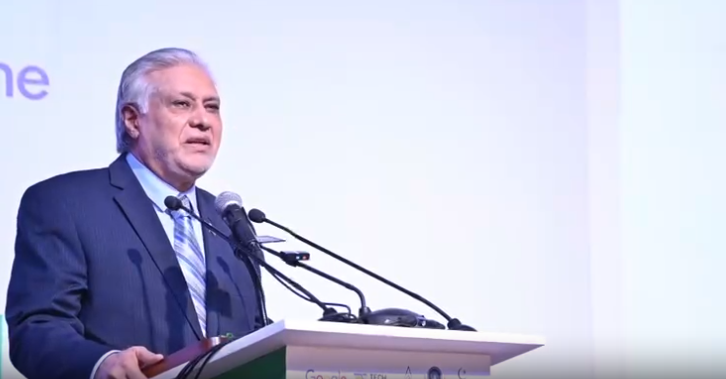
Islamabad (Web Desk): Deputy Prime Minister and Foreign Minister Senator Ishaq Dar on Tuesday described the launch of Pakistan’s first Chromebook assembly line as a “defining moment” in the country’s digital transformation, emphasizing that the government was taking practical measures to achieve the vision of a technologically advanced nation.
Addressing an event titled “Building the Digital Future, Together,” held to celebrate the inauguration of the Chromebook assembly line, the deputy premier said that local production of Chromebooks would make digital devices more accessible and affordable, particularly benefiting the education sector.
He noted that this development, along with Google’s decision to establish its local presence and its agreement with the government to train Pakistani youth, reflected a significant milestone in the nation’s progress toward digital modernization.
Calling the initiative a step of major economic importance, DPM Dar said it would generate employment, strengthen the supply chain, and open avenues for future technology exports.
He added that Google’s closer engagement with Pakistan would help connect the company with local developers, entrepreneurs, and startups, encouraging direct collaboration and greater access to international markets.
"You will not regret choosing Pakistan. The environment for investment is improving rapidly, and more global firms will soon follow. Pakistan is advancing steadily toward the position it deserves among the world’s leading nations," said DPM Dar while assuring Google of Islamabad’s full support.
He informed the gathering that under a memorandum of understanding (MoU), Google and the Government of Pakistan would work together to train 100,000 developers in artificial intelligence skills across the country.
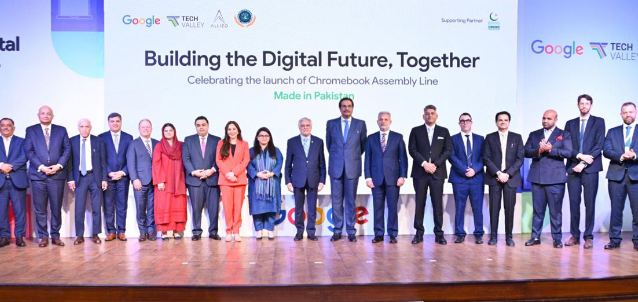
DPM Dar reaffirmed the government’s commitment to creating an investor-friendly environment for technology firms and promoting a sustainable local presence.
He said that to speed up business operations, the government had set up the Special Investment Facilitation Council (SIFC), which helps companies establish themselves in minimal time.
"Our policies are aimed at turning Pakistan into a regional hub for technology and innovation, underpinned by transparent regulations, investment-friendly frameworks, and support for creativity," the deputy premier said.
Referring to high taxation concerns, Dar stated that the government was pursuing reforms to ensure a fair, affordable, and competitive tax system.
Discussing the broader economy, he said the government was determined to put Pakistan on a path that would eventually lead to membership in the G20 group of major economies.
Highlighting the country’s vast natural wealth, Dar said that while Pakistan’s debt and liabilities stood at $130 billion, its resources—including minerals, stones, and hydrocarbons—were valued between $6 trillion and $10 trillion.
"In comparison, our debt is insignificant. We are moving swiftly to capitalize on these assets," he remarked.
Having recently returned from Istanbul after attending the Coordination Meeting of Arab-Islamic Foreign Ministers, DPM Dar also mentioned that a Gaza peace agreement—signed last month in the presence of former US President Donald Trump by eight nations—was now moving toward implementation.
Neo News | Copyright © 2026