Thu, September 17, 2026

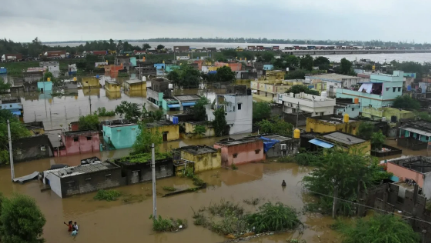
Abuja (Web Desk/Agencies): At least 117 people have died and many others remain missing following devastating floods that struck Nigeria’s Niger State earlier this week. The disaster, which unfolded late Wednesday night and continued into Thursday morning, submerged more than 3,000 homes across two communities and left survivors in desperate need of aid.
The latest death toll marks a sharp rise from the initial figure of 21 reported on Thursday, according to Ibrahim Hussaini, head of the Niger State Emergency Management Agency.
The flooding, triggered by relentless rainfall, overwhelmed infrastructure in Mokwa, a key trading hub that connects agricultural producers in the north with markets in the south.
Officials and emergency personnel say the destruction has been extensive, with numerous residents still unaccounted for.
Husseini Isah, a local emergency operations chief, confirmed that many people remain in the water and that the situation on the ground is dire.
Among the affected is 29-year-old Mohammed Tanko, a civil servant who lost 15 relatives from the home where he was raised.
"The property is gone. We lost everything," he said. Another victim, 35-year-old fisherman Danjuma Shaba, described how his house collapsed in the floodwaters, forcing him to sleep in a car park. "I don’t have a house to sleep in," he added.
This latest disaster comes just days after Nigeria’s meteorological agency issued warnings of possible flash floods in 15 states, including Niger. The country’s rainy season, which began in April and lasts about six months, has increasingly brought such catastrophes.
Experts attribute the growing frequency and severity of these events to climate change, compounded by poor urban planning and failing drainage systems.
Nigeria is no stranger to deadly floods. In 2022, the country witnessed its worst flooding in more than a decade, resulting in over 600 deaths, the displacement of approximately 1.4 million people, and the destruction of 440,000 hectares of farmland.
More recently, in September 2024, similar torrential rains in Maiduguri, northeast Nigeria, claimed the lives of at least 30 people and displaced millions.
Last year, over 1,200 people were killed and 1.2 million displaced in flood events that affected 31 out of Nigeria’s 36 states, according to the National Emergency Management Agency.
The scale of the disaster in Niger State underscores the urgent need for improved emergency response, climate resilience measures, and infrastructure upgrades to better protect vulnerable communities from future flooding.
Neo News | Copyright © 2026