Thu, September 17, 2026

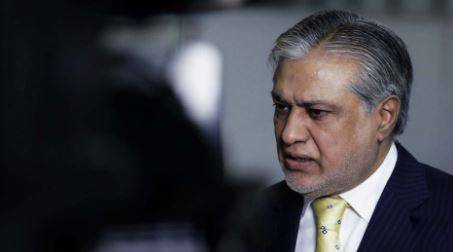
Islamabad (Web Desk): Pakistan’s Deputy Prime Minister and Foreign Minister Ishaq Dar has cautioned India against pursuing unilateral measures, calling on New Delhi to revisit its regional policies and end what he described as a strategy of coercion.
Speaking at the Foundation Day ceremony of the Institute of Strategic Studies in Islamabad, Dar said India must not attempt to dictate terms to Pakistan. He criticized India’s actions following the April 22 attack in Pahalgam, which killed 26 people and was blamed on Pakistan by Indian authorities — an accusation Islamabad has firmly denied.
“India must revisit its strategic choices and end its policy of coercion,” Dar said. He also alleged that India has repeatedly used “false flag operations,” such as the Pulwama incident, to justify aggression against Pakistan.
Tensions surged after the Pahalgam attack, prompting India to take a series of hostile steps on April 23. These included the suspension of the 65-year-old Indus Waters Treaty (IWT), cancellation of Pakistani visas, closure of the Wagah-Attari border crossing, and the shutdown of the Pakistan High Commission in New Delhi. Both countries have since scaled down their diplomatic missions.
Dar condemned India’s suspension of the IWT, accusing it of attempting to "weaponise water" and asserting that New Delhi has no legal authority to halt the treaty unilaterally.
“The Indus Waters Treaty is a binding international agreement. Any attempt to undermine it threatens regional stability,” he said.
On the issue of Jammu and Kashmir, Dar reiterated Pakistan’s stance that the dispute is internationally recognized and must be resolved peacefully in accordance with international law.
Commenting on broader regional developments, Dar welcomed the ceasefire between Iran and Israel and reaffirmed Pakistan’s support for Iran’s position on key issues, including its nuclear program. He also expressed deep concern over the humanitarian situation in Gaza, condemning ongoing violence and human rights violations.
Meanwhile, Prime Minister Shehbaz Sharif welcomed the Supplemental Award issued by the Permanent Court of Arbitration, which affirmed that India cannot unilaterally suspend the Indus Waters Treaty or bypass its dispute resolution mechanisms. The court ruled that the treaty remains binding unless both parties agree to terminate it.
Sharif described the ruling as a major diplomatic victory and credited Law Minister Azam Nazeer Tarar and Attorney General Mansoor Awan for their legal efforts.
In a separate statement, Pakistan Peoples Party (PPP) Chairman Bilawal Bhutto Zardari issued a stern warning, saying Pakistan would consider more serious options if India fails to uphold the treaty. “India must choose between honouring the treaty or losing control of all six rivers,” Bilawal said at a political rally in Sukkur. He added, “Either the river will flow, or their blood will.”
Neo News | Copyright © 2026