Fri, September 18, 2026

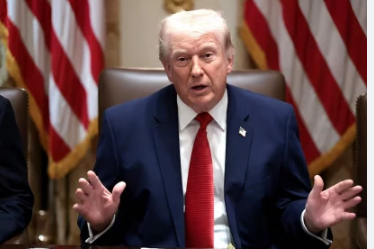
Washington (Web Desk): US President Donald Trump has said he will continue the suspension of strikes on Iran’s energy infrastructure into April, while claiming that discussions with Iran are progressing positively.
However, an Iranian official pushed back, describing a US plan to end the conflict as biased and unjust.
Now in its fourth week, the war has expanded across the Middle East, leaving thousands dead and sending shockwaves through the global economy. Energy markets have been hit particularly hard, with rising prices driving concerns about increasing inflation worldwide.
The fighting began on February 28, when the United States, alongside Israel, carried out attacks on Iran after negotiations over its nuclear programme failed to produce an agreement.
Posting on Truth Social, Trump insisted that negotiations were ongoing and stated that, despite what he called misleading reports from the “Fake News Media,” talks were going “very well.” Iran, however, denied that any such engagement with Washington is currently taking place.
The US president also claimed that Tehran had sought a seven-day halt to strikes targeting its energy facilities. Earlier, on March 23, he had announced a five-day pause on attacks against power plants and related infrastructure, which has now been extended to ten days.
The conflict has caused major disruption to global supply chains and energy flows. Oil prices have surged by roughly 40%, while liquefied natural gas has also seen sharp increases. At the same time, the cost of nitrogen-based fertilizers—essential for agriculture—has jumped by about 50%.
Despite Trump’s positive remarks, Iran has continued to respond militarily, launching attacks on Israeli territory and US installations. It has also targeted Gulf countries and effectively choked off fuel shipments through the Strait of Hormuz, a vital route that handles around one-fifth of the world’s oil and LNG supply.
Trump suggested that Iran could allow ten oil tankers to pass through the strait as a goodwill gesture under a proposed 15-point peace framework. Tehran rejected the proposal, arguing that it primarily serves the interests of Washington and Tel Aviv.
He warned that if Iran fails to meet US demands—including reopening the Strait of Hormuz and abandoning its nuclear ambitions—the US would become Iran’s “worst nightmare.” Trump also hinted at the possibility of taking control of Iran’s oil resources, though he did not provide specifics.
According to reports, the proposal includes conditions such as dismantling Iran’s nuclear programme, limiting its missile capabilities, and effectively relinquishing control over the key maritime passage.
Meanwhile, The Pentagon is said to be weighing the deployment of up to 10,000 additional troops, while also using uncrewed drone boats to strengthen maritime patrols.
Iran has, in response, taken a tougher negotiating position, seeking guarantees against future attacks, compensation for damages suffered during the war, and formal authority over the Strait of Hormuz.
On Thursday, Iran launched multiple waves of missiles at Israel, hitting major cities including Tel Aviv and Haifa.
Neo News | Copyright © 2026