Thu, September 17, 2026

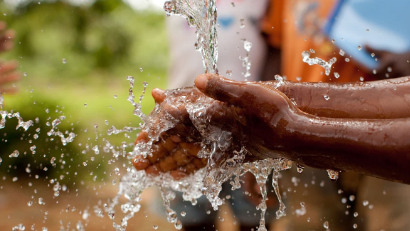
New York (Web Desk): Despite improvements in recent years, billions of people around the globe still lack access to clean drinking water, adequate sanitation, and hygiene services, leaving them vulnerable to illness and social marginalization.
This was revealed in a new report released on Tuesday by two United Nations agencies—the World Health Organization (WHO) and the United Nations Children’s Fund (UNICEF)—to mark the beginning of World Water Week.
The report emphasizes that the world’s most disadvantaged populations continue to face the largest disparities in access to water and sanitation.
Currently, an estimated 2.1 billion individuals do not have access to safely managed drinking water, and approximately 106 million people are forced to depend on untreated water from natural sources such as rivers or lakes.
Ruediger Krech, Director of WHO’s Department of Environment, Climate Change and Health, underscored the urgency of the situation, stating that clean water, sanitation, and hygiene are fundamental human rights, not optional services.
The findings reveal that people living in the world’s least developed nations are more than twice as likely to go without essential drinking water and sanitation compared to those in more developed regions, and more than three times as likely to lack access to basic hygiene.
Cecilia Scharp, who leads UNICEF’s global work on water, sanitation, and hygiene, highlighted the specific challenges faced by girls, who often shoulder the burden of collecting water and encounter significant obstacles managing menstruation due to the lack of proper facilities and materials.
Data gathered from 70 countries indicates that while most women and adolescent girls have access to some form of menstrual materials and a private place to change, many still do not have enough supplies to manage their periods safely and with dignity.
Globally, around 1.7 billion people are still without fundamental hygiene services at home, and within that group, 611 million have no facilities whatsoever.
Both WHO and UNICEF leaders stressed that progress must be accelerated to fulfill global commitments, particularly the Sustainable Development Goals set for 2030.
Krech warned that unless action is ramped up, especially for marginalized populations, the goal of achieving safe water and sanitation for all could become increasingly out of reach. Scharp echoed this concern, noting that at the current rate of progress, millions—especially children—will continue to be left behind unless stronger, faster measures are taken.
Neo News | Copyright © 2026