Fri, September 18, 2026

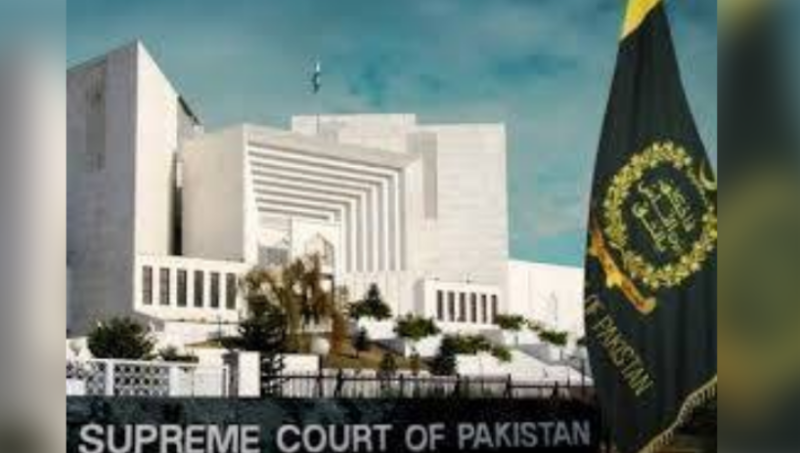
Islamabad (Web Desk): The Supreme Court (SC) constitutional bench has cast serious doubt on the eligibility of the Sunni Ittehad Council (SIC) to claim reserved seats in Parliament, raising fundamental constitutional questions about how independent candidates can align themselves with a political party that did not participate in the general elections or hold any presence in Parliament.
During a high-profile, live-streamed hearing, Justice Amin-ud-Din Khan presided over an 11-member constitutional bench to assess the validity of SIC's claim over reserved seats following the post-election alignment of independent candidates.
The bench was critical of the argument that independents could legally join a party that had not contested the 2024 general elections.
Justice Musarrat Hilali, in particular, questioned the constitutional soundness of such an arrangement, asking pointedly whether SIC had even entered the electoral race. This recurring line of inquiry underscored the judiciary’s skepticism regarding the party’s basis for claiming proportional representation.
The key point before the court was whether the SIC, which did not contest the polls and thus had no electoral footprint, could legally absorb independent candidates and become eligible for reserved seats in the National Assembly (NA).
As per the court, such entitlement typically depends on a party's performance in elections, and this principle appeared to conflict with the SIC’s current position.
Senior lawyer Makhdoom Ali Khan, representing the women members of the National Assembly who were de-notified from their reserved seats, argued that the SIC's plea had been previously dismissed unanimously, and the de-notifications occurred without any formal legal proceedings or notices.
He highlighted what he viewed as procedural violations by the Election Commission of Pakistan (ECP), adding that the affected members were sidelined without due process.
Justice Hilali reminded the court that the earlier ECP notification concerning these reserved seats had already been invalidated by the judiciary. She emphasized that the matter at hand was about proportional representation and that reserved seats are not assigned arbitrarily but rather as a reflection of a party’s actual performance in the general elections.
In response, Makhdoom Ali Khan cited the Constitution’s Article 225, which restricts challenges to election outcomes to designated election tribunals. However, the bench pushed back on this assertion, clarifying that the present issue was distinct from direct election contests and therefore not governed by Article 225.
The bench viewed it instead as a structural issue of parliamentary representation, not one of individual electoral disputes.
Justice Jamal Khan Mandokhail was unequivocal during the proceedings, stating that SIC lacked the constitutional or electoral standing to receive reserved seats.
He reaffirmed that eligibility for such seats is contingent upon a party’s formal participation in the general elections and subsequent representation in Parliament.
The dispute is closely linked to a significant SC ruling issued on July 12, 2024, which, if executed in full, would reshape the composition of the National Assembly by officially recognizing 39 out of 80 contested MNAs as legitimate members of the Pakistan Tehreek-e-Insaf (PTI).
The ruling, backed by a majority of eight out of thirteen judges, would elevate PTI to the status of the single largest party in Parliament, qualifying it for a proportional share of reserved seats.
However, the implementation of that decision has faced resistance from multiple fronts, including the ECP and major political parties like the Pakistan Muslim League-Nawaz (PML-N) and the Pakistan Peoples Party (PPP), all of whom have filed review petitions.
The top strongly criticized the ECP for its handling of the situation, particularly in a detailed verdict authored by Justice Mansoor Ali Shah.
The court pointed to repeated legal missteps by the ECP, accusing it of fostering confusion and undermining both the PTI and the public’s electoral mandate. Justice Shah noted that the ECP failed to act as an impartial authority and instead allowed administrative misjudgments to affect the electoral process.
This criticism did not stop at written opinions. On September 14, 2024, the Supreme Court issued a clarification explicitly condemning the ECP’s failure to comply with the July 12 judgment.
Justice Shah later reiterated this stance in October, asserting that an amendment made to the Elections Act in August 2023 had no bearing on the validity of the reserved seats verdict.
As the case proceeds, the constitutional bench has adjourned the hearing until Tuesday, when SIC’s counsel is expected to present its arguments.
Neo News | Copyright © 2026