Fri, September 18, 2026

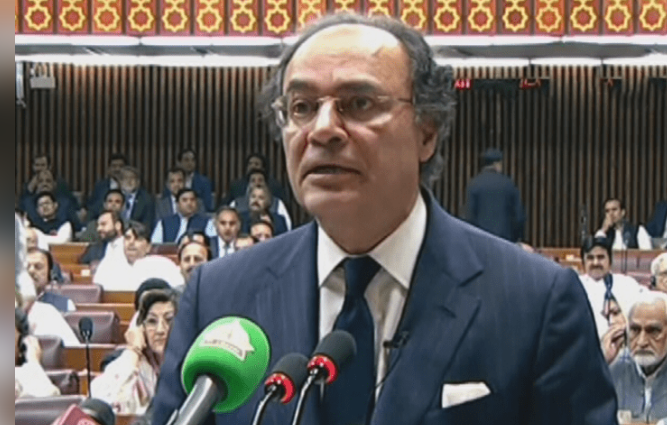
Islamabad (Web Desk): Finance Minister Muhammad Aurangzeb has termed the Federal Budget for the financial year 2025–26 as balanced, emphasizing that it has been designed to lay the groundwork for inclusive and sustainable economic growth.
Speaking during the concluding session of the budget debate in the National Assembly, he outlined several revisions made to the initial budget proposals, highlighting the government’s intent to address key economic and social challenges.
He acknowledged the tax burden on the salaried class and announced a new measure where individuals earning between Rs0.6 million to Rs1.2 million annually will now be subject to a 1% income tax.
To encourage renewable energy adoption, he revealed a reduction in the sales tax on imported solar panels from eighteen percent to ten percent.
Addressing concerns regarding the misuse of authority by the Federal Board of Revenue (FBR), the finance minister stated that the FBR will no longer be able to arrest individuals in tax cases involving amounts up to fifty million rupees without obtaining a judicial warrant.
To bridge the revenue shortfall, Muhammad Aurangzeb announced three new measures, all aimed at taxing the affluent. These include the imposition of a federal excise duty of Rs10 on one-day-old chicken, an increase in tax rates on companies’ investments in mutual funds, and higher taxes on earnings from investments in government securities.
He explained that the overall focus of the budget is on enhancing government revenues through broadening the tax base and improving compliance, rather than increasing the burden on existing taxpayers.
The finance minister emphasized the role of digitalization in improving tax compliance and noted that new laws are being introduced to support these efforts.
Aurangzeb reiterated the government's commitment to easing the tax load on the salaried class and announced support measures for the construction sector.
He also highlighted that the reduction in import duties would lower input costs for industries, strengthen exports, and help curb smuggling while promoting industrial growth.
The finance minister mentioned that the government will soon unveil a new industrial policy and that consultations have begun for the formulation of an electric vehicle (EV) policy.
Social protection has also been prioritized, with the allocation for the Benazir Income Support Programme (BISP) increasing from Rs592 billion to Rs716 billion. In a move to better align youth with the labour market, he announced Pakistan’s first Skills Impact Bond, aimed at equipping young people with market-relevant skills.
The budget also includes significant support for small farmers, with the launch of a flagship program offering loans of up to Rs1 million without requiring any guarantee.
These loans will be issued digitally to farmers owning up to 12.5 acres of land. The program will also provide crop and life insurance. Furthermore, the government is developing a mechanism for electronic warehouse receipts to ensure that farmers receive fair prices for their produce.
In the housing sector, the finance minister announced a new financing scheme for low-income groups, aiming to make home ownership more accessible.
He also highlighted the government’s support for women, reporting that Rs14 billion worth of loans were provided to 193,000 women under the Women Inclusive Finance Program during the outgoing year.
An additional Rs14 billion has been allocated for women’s financial inclusion in the coming fiscal year.
Neo News | Copyright © 2026