Fri, September 18, 2026

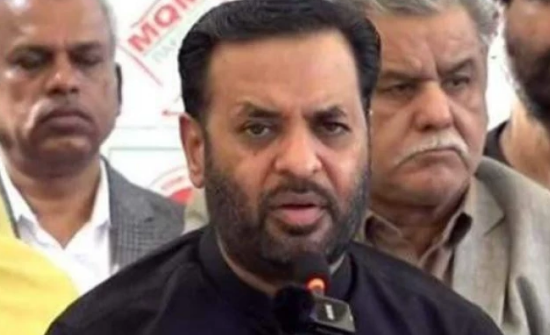
Karachi (Web Desk): Federal Health Minister and Muttahida Qaumi Movement (Pakistan) MQM-P leader Syed Mustafa Kamal on Thursday demanded that Karachi be brought under direct federal administration, blaming the Pakistan Peoples Party (PPP)-led Sindh government for what he described as the city’s continued collapse.
Addressing a press conference at MQM-P’s Bahadurabad headquarters, he said the 18th Constitutional Amendment had turned into a “nasoor” for Sindh and the country, arguing that it had failed to deliver effective governance.
Expressing sorrow over the recent fire at Gul Plaza, Kamal offered prayers for the deceased and their families.
He said MQM-Pakistan viewed it as its duty to speak for the city, adding that as a major political force in Karachi and Sindh, the party recognised its responsibilities and remained committed to fulfilling them.
Kamal then strongly criticised the 18th Amendment, which devolved powers to the provinces, saying it had caused more harm than good.
He claimed the amendment had brought no relief to the public and instead worsened conditions, using harsh language to describe it as destructive for the country.
The MQM-P leader said that people were paying the price of poor governance with their lives, while the promised benefits of devolution never reached ordinary citizens.
His remarks came against the backdrop of a heated debate in the National Assembly a day earlier, where lawmakers from the ruling Pakistan-Muslim League-Nawaz (PML-N) and its coalition partner PPP argued over the amendment.
During the debate, Federal Food Minister Rana Tanveer Hussain linked governance failures to the Gul Plaza tragedy. MQM’s Syed Hafeezuddin said the amendment should not be treated as untouchable and proposed the creation of new administrative units in Sindh, while PPP leader Syed Naveed Qamar defended the amendment and warned that any move against it would weaken provincial autonomy.
Kamal accused the Sindh government of allowing criminal elements and extremists to flourish due to weak administration.
He alleged that during the PTI government formed in 2018, the PPP was given free hand without accountability for four years.
The MQM-P leader claimed the party used political pressure tactics, including threats to destabilise the federal government, to maintain its influence and continue governing without checks.
Calling for immediate action, Kamal said that since the provincial government had failed to run Karachi, control of the city should be transferred to the federation under Governor’s Rule.
He cited Articles 148 and 149 of the Constitution, saying these provisions were included to allow federal intervention when a province is unable to ensure governance and maintain law and order.
Referring to MQM’s past, Kamal said the party’s workers and youth had played a significant role in the country’s political history. He described the situation in urban areas as a form of systematic destruction, claiming residents were being pushed toward despair.
The minister recalled previous deadly fires, including incidents at Bolton Market and in high-rise buildings, and said he had personally stayed at those sites for several nights during rescue operations.
Responding to accusations levelled against MQM, Kamal claimed that senior PPP figures had previously sought his party’s support.
He also alleged that foreign intelligence agencies had exploited Karachi’s instability, saying the city had been left exposed due to the absence of effective oversight.
The MQM-P leader said the system was producing frustrated and disillusioned people, questioned how many more deaths would be needed before serious intervention took place, and claimed that Karachi’s condition had deteriorated to the point where it now ranked among the world’s fourth most worst cities.
Mustafa Kamal warned that continued administrative failure would further alienate citizens and create opportunities for external forces to take advantage of the situation.
Neo News | Copyright © 2026