Fri, September 18, 2026

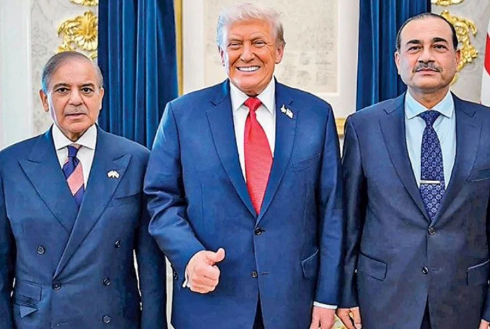
Washington (Web Desk): US President Donald Trump has announced to extend the ceasefire with Iran for an unspecified period, offering more space for diplomatic engagement, while Tehran had not issued any immediate reaction early Wednesday.
The move effectively postpones the conclusion of the earlier two-week truce. Trump said the extension followed a request from mediator Pakistan and underlined that Iran’s “fractured” leadership required additional time to prepare and present a proposal.
Despite the extension, he maintained that the US blockade on Iranian ports — a key dispute for Tehran — would stay in place.
Writing on Truth Social, Trump claimed Iran was keen to keep the Strait of Hormuz operational in order to continue earning around $500 million daily, cautioning that such income could be at risk if the route remains closed. He stressed that sustaining US pressure on the crucial passage, through which nearly a fifth of the world’s oil and gas supplies move, is essential to reaching any agreement.
???? pic.twitter.com/7dXfz9afth
— Rapid Response 47 (@RapidResponse47) April 21, 2026
“People approached me four days ago, saying, 'Sir, Iran wants to open up the Strait, immediately.' But if we do that, there can never be a Deal with Iran, unless we blow up the rest of their Country, their leaders included!,” Trump said.
Earlier, Trump had indicated he was not inclined to continue the ceasefire and had warned that military operations could resume after its expiry. “I have... directed our Military to continue the Blockade and, in all other respects, remain ready and able, and will therefore extend the Ceasefire until such time as their (Iran's) proposal is submitted,” he wrote.
Prior to this late intervention, there had been confusion about when exactly the ceasefire would lapse. Pakistan had stated it would end at 2350 GMT Tuesday, whereas Iran pointed to 0000 GMT. The deadline passed quietly without reports of fresh clashes, though Tehran has yet to formally comment on the extension.
The status of peace negotiations being facilitated in Pakistan has now become uncertain following Trump’s announcement.
A White House official confirmed that Vice President JD Vance would not travel to Pakistan as initially scheduled, pending Iran’s submission of a proposal.
Security arrangements were significantly tightened across Islamabad on Tuesday, with large parts of the city effectively closed, even though no confirmed meeting between US and Iranian officials was on the agenda.
Prime Minister Shehbaz Sharif responded to President Trump in a post on X and offered thanks.
On my personal behalf and on behalf of Field Marshal Syed Asim Munir, I sincerely thank President Trump for graciously accepting our request to extend the ceasefire to allow ongoing diplomatic efforts to take their course.
— Shehbaz Sharif (@CMShehbaz) April 21, 2026
With the trust and confidence reposed in, Pakistan…
Speaking both personally and on behalf of Chief of Defence Forces (CDF) and Chief of Army Staff (COAS) Field Marshal Syed Asim Munir, the premier thanked President Trump for agreeing to prolong the truce, allowing diplomatic efforts to continue. He reiterated Pakistan’s commitment to facilitating dialogue and said the country would keep working sincerely toward a negotiated resolution.
PM Shehbaz also voiced optimism that both sides would honour the ceasefire and move toward a broader and lasting agreement. He pointed to a second round of peace talks planned in Islamabad, which he hopes will help bring a permanent end to the conflict.
Earlier, Pakistan had formally appealed to both Washington and Tehran to extend the ceasefire. At that point, officials were still waiting for Iran’s confirmation regarding participation in the upcoming Islamabad talks.
Deputy Prime Minister and Foreign Minister Ishaq Dar, during a meeting with US Chargé d’Affaires Natalie A. Baker, stressed the importance of continued engagement between the two countries. He encouraged both sides to prolong the ceasefire and prioritize diplomacy, underlining Pakistan’s long-standing position that dialogue remains the only effective way to resolve disputes and ensure regional stability.
Later, Information Minister Attaullah Tarar stated via X that Iran had yet to formally confirm whether it would send a delegation to Islamabad. He noted that Pakistan, acting as a mediator, remains in close contact with Iranian officials and continues to push for constructive dialogue. He described Iran’s decision on attending the talks within the remaining ceasefire period as crucial, adding that Pakistan has made persistent efforts to persuade Iranian leadership to take part.
Meanwhile, Iranian Foreign Ministry spokesperson Esmail Baghaei indicated in comments to state television that no final decision had been made about joining further discussions. He cited what he called unacceptable actions by the US, seemingly referring to recent tensions involving the Strait of Hormuz, as a factor behind Iran’s hesitation.
As the initial deadline approached, Iran had already warned it might strike oil installations in neighboring Gulf states if their territories were used for attacks once the ceasefire ended.
Following the first round of talks in Islamabad, Washington imposed a blockade on Iranian ports.
Both sides have continued trading accusations of ceasefire violations, highlighting the fragile and uncertain nature of the truce.
This temporary pause in hostilities had originally been announced on April 8 following a request by Prime Minister Shehbaz Sharif, who had also urged Iran to keep the Strait of Hormuz open for the same duration.
The timing was especially critical, coming just hours before a previously indicated deadline by US President Trump that hinted at possible strikes on Iranian infrastructure, alongside stark warnings about devastating consequences.
Neo News | Copyright © 2026