Thu, September 17, 2026

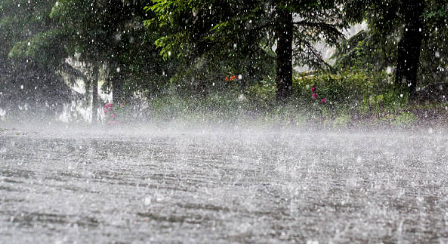
Islamabad (Web Desk): A significant spell of monsoon activity is expected to grip large parts of Pakistan from August 23 to 29, with the Pakistan Meteorological Department (PMD) sounding the alarm over the likelihood of intense rainfall, strong winds, and thunderstorms across multiple regions.
The weather systems, including robust monsoon currents from both the Arabian Sea and the Bay of Bengal and an approaching westerly wave over the northern areas, are anticipated to fuel widespread and, at times, heavy precipitation.
Beginning August 22, these systems are expected to gradually build, affecting upper parts of the country first. From August 23 onward, areas in Kashmir and Gilgit-Baltistan are likely to receive consistent and heavy rainfall, with the possibility of severe weather conditions lasting through August 27.
Similar impacts are forecast for various districts in Khyber Pakhtunkhwa, where widespread rainfall is expected between August 23 and 26.
Regions such as Swat, Dir, Kohistan, Mansehra, Abbottabad, Peshawar, Mardan, and Charsadda may see periods of particularly heavy downpours, raising the risk of flash flooding and landslides.
Punjab, including the federal capital Islamabad, will also face widespread rain events, primarily from August 23 to 27. Cities like Rawalpindi, Lahore, Murree, Gujranwala, Faisalabad, and Sialkot are expected to experience heavy rainfall that could lead to urban flooding. In southern Punjab, districts such as Multan, Bahawalpur, and Dera Ghazi Khan may witness scattered but significant showers, especially on August 24 and 27.
The southeastern region of Sindh is also in the path of the wet spell. Districts including Tharparkar, Umerkot, Mithi, and Mirpurkhas are likely to receive rain starting the night of August 23 and continuing until August 26. Further west, parts of eastern and southern Balochistan are forecast to see heavy showers between August 27 and 29, while earlier rain spells between August 23 and 26 may affect Barkhan, Musakhel, Loralai, and Khuzdar.
According to the PMD, the torrential rains are expected to swell local streams and cause flash floods in parts of northern Khyber Pakhtunkhwa, Murree, Galliyat, Kashmir, and the hilly terrain of Dera Ghazi Khan.
Urban flooding is a pressing concern in several low-lying urban areas, including those in Islamabad, Rawalpindi, Lahore, Gujranwala, Faisalabad, Sialkot, Peshawar, Mardan, and Nowshera. Meanwhile, the threat of landslides looms over vulnerable mountainous regions such as Murree, Galliyat, Gilgit-Baltistan, and northern KP, where saturated soil conditions could trigger dangerous slope failures.
Additionally, strong winds accompanied by lightning strikes may pose further risks by damaging infrastructure, including weak buildings, electric poles, signboards, vehicles, and solar energy installations.
The Met Office has urged citizens, particularly travelers and tourists, to exercise caution, avoid unnecessary movement in at-risk areas, and monitor updates from official sources.
Relevant departments and disaster management authorities have been instructed to maintain high alert levels and implement preventive measures to reduce potential damage during the volatile weather window.
Neo News | Copyright © 2026