Thu, September 17, 2026

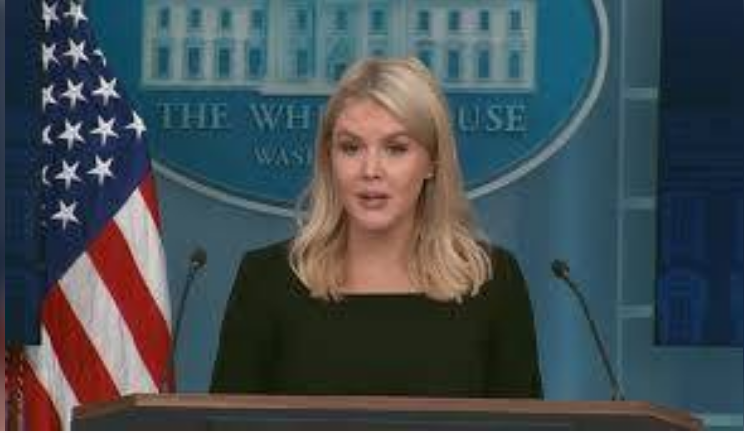
Washington (Web Desk/Agencies): President Donald Trump is expected to decide within the next two weeks whether the United States (US) will intervene in the ongoing air war between Israel and Iran, the White House said Thursday, increasing pressure on Tehran to consider returning to negotiations.
Speaking to reporters, White House Press Secretary Karoline Leavitt relayed a message from the president: "Based on the fact that there's a substantial chance of negotiations that may or may not take place with Iran in the near future, I will make my decision whether or not to go within the next two weeks."
Trump, the Republican president who returned to office five months ago, has left both allies and adversaries guessing about his intentions, oscillating between calls for diplomacy and strong rhetoric hinting at military action.
Earlier in the week, he made waves by suggesting on social media the possibility of targeting Iran’s Supreme Leader Ayatollah Ali Khamenei, then demanding Iran’s unconditional surrender. On Wednesday, he remarked that “nobody knew” what he was going to do.
These mixed signals have started to cause divisions within his political base. More traditional hawkish Republicans are increasingly at odds with the party's growing isolationist wing. Critics outside the party have voiced skepticism about Trump's latest timeline, noting a pattern in which he issues high-stakes deadlines—such as on trade disputes or foreign conflicts—only to let them lapse or postpone action.
"I think going to war with Iran is a terrible idea, but no one believes this 'two weeks' bit," Democratic Senator Chris Murphy posted on X. "He’s used it a million times before to pretend he might be doing something he’s not. It just makes America look weak and silly."
At the White House briefing, Leavitt reiterated that the president’s preference is for a diplomatic resolution with Iran, though she underscored that preventing Tehran from acquiring a nuclear weapon remains his top priority.
She emphasized that any new agreement would need to fully halt Iran's ability to enrich uranium and ensure that it cannot develop a nuclear weapon.
"The president is always interested in a diplomatic solution ... if there's a chance for diplomacy, the president's always going to grab it," Leavitt said. "But he's not afraid to use strength as well I will add."
When asked whether Trump would seek congressional authorization for potential military strikes, Leavitt declined to give a direct answer. Democratic lawmakers have voiced concern following media reports, including from CBS, suggesting that Trump has already approved a military plan against Iran without involving Congress, which constitutionally holds the power to declare war.
Leavitt claimed that US officials now believe Iran is closer than ever to achieving a nuclear weapon, stating that Tehran could potentially develop one within “a couple of weeks.”
This statement contradicts what Trump’s own intelligence director, Tulsi Gabbard, told Congress in March, when she said that the intelligence community continued to assess that Iran was not actively developing a nuclear warhead.
This week, Trump dismissed Gabbard's earlier testimony, telling reporters, "I don't care what she said. I think they were very close to having one."
As tensions escalate, some members of Trump's inner circle are advising restraint. Steve Bannon, a close Trump ally, publicly urged caution over potential US involvement in Israel’s efforts to dismantle Iran’s nuclear infrastructure.
The conflict between Israel and Iran has intensified sharply. On Thursday, Israel launched strikes against Iranian nuclear targets. In response, Iran retaliated with a barrage of missiles and drones, following a strike that damaged an Israeli hospital. Neither side appears to be moving toward de-escalation.
Leavitt confirmed that Trump had been briefed on Israel’s operation and remains in frequent contact with Israeli Prime Minister Benjamin Netanyahu. She warned that Iran is in "a deeply vulnerable position" and said that serious consequences would follow if Tehran does not halt its nuclear ambitions.
Iran, facing what analysts describe as its gravest national security crisis since the 1979 revolution, is reportedly considering a range of responses.
According to three diplomats speaking to Reuters, indirect talks have taken place between the two nations. Trump's special envoy, Steve Witkoff, has reportedly had several phone calls with Iran’s Foreign Minister Abbas Araqchi since the Israeli strikes began last week.
Neo News | Copyright © 2026