Thu, September 17, 2026

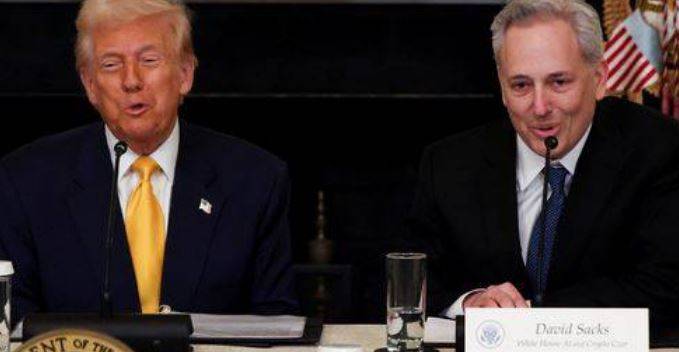
Washington (Web Desk): Deep divisions within the U.S. administration over the ongoing military campaign against Iran have become increasingly visible, highlighting contrasting approaches to the crisis in the Middle East.
Key advisers have reportedly urged President Donald Trump to declare victory and withdraw, but the president has emphasized that any decision to end the conflict will rest solely with him.
David Sacks, the White House adviser on technology and artificial intelligence (AI), recently sent a memorandum to Trump recommending that the administration frame the current military operations as a “success” and close the new Middle East front.
According to Sacks, prolonging the war could entangle the United States in a long, expensive conflict with potentially uncontrollable consequences. He warned that continued escalation might strain resources and undermine broader U.S. strategic goals in the region.
Reports indicate that the U.S. administration is currently divided into two main factions:
Hardline military advocates – officials who support extending the campaign until Iran’s military capabilities are fully neutralized. They argue that only a decisive weakening of Iran’s forces will ensure regional stability and safeguard U.S. interests.
Strategic exit proponents – advisers who believe Tehran has already received the intended message and that continuing the conflict unnecessarily risks overextension and regional instability. They advocate a phased withdrawal and diplomatic management of the situation.
Despite the internal debate and mounting pressure from advisers, President Trump has rejected any immediate ceasefire. Speaking in his characteristic, decisive tone, he stated that the war will end only when he personally deems it appropriate. Analysts say this signals that the U.S. is likely to maintain a flexible, Trump-driven strategy in the region, balancing military action with political messaging rather than committing to a defined exit timeline.
Defense experts caution that this divided approach within the U.S. administration could complicate coordination with allies and heighten uncertainty in the region. They also note that while Trump’s approach may allow for rapid, unilateral decision-making, it risks prolonging conflict and raising the stakes for both U.S. forces and regional actors.
As tensions with Iran remain high, the internal divisions in Washington suggest that the U.S. strategy could shift unpredictably in the coming weeks, depending heavily on the president’s judgment rather than a unified policy consensus.
Neo News | Copyright © 2026