Thu, September 17, 2026

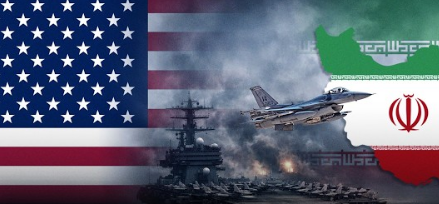
Washington /Tehran (Web Desk): The United States intensified its military attacks against Iran on Monday, carrying out a ninth straight day of airstrikes as fears mounted over the security of the Strait of Hormuz after Tehran claimed that two oil tankers had exploded and were left disabled in the strategically vital waterway.
US Central Command said it had launched "a new wave of strikes" aimed at reducing Iran's capacity to target commercial shipping passing through the Strait of Hormuz. The command did not disclose additional operational details.
— U.S. Central Command (@CENTCOM) July 20, 2026
The latest military action marks another escalation in the conflict that reignited after an interim ceasefire reached last month fell apart. Since then, both countries have exchanged repeated attacks, fuelling concerns over the stability of one of the world's busiest oil transit routes and raising fears of disruptions to global energy markets and rising inflation.
Iran's semi-official Tasnim News Agency reported that American missiles struck multiple locations across the country early Monday. According to its correspondents, blasts were recorded in Tabriz, Chabahar, Konarak, Bandar Mahshahr and Bandar Imam Khomeini.
سپاه: دو نفتکش که قصد تردد در مسیر ناایمن تنگه هرمز را داشتند منفجر شدند
— خبرگزاری تسنیم (@Tasnimnews_Fa) July 20, 2026
ارتش متجاوز، آماده عملیات تنبیه ما بهخاطر این تخلف غیرقانونی باشد
US Secretary of State Marco Rubio said Washington would maintain military pressure as long as Iran continued threatening international maritime traffic.
"The Strait of Hormuz are international waterways, and they continue to launch against the ships in that international waterway," Rubio said.
"As long as Iran insists on controlling an international waterway, we're gonna have to respond to that. The United States always remains open to a diplomatic solution."
Meanwhile, Iran's Islamic Revolutionary Guard Corps (IRGC) announced that it had carried out what it described as a surprise attack on "the enemy's special operations headquarters in Syria's Al-Tanf area."
The Guards also claimed they had fired ballistic missiles at US aircraft stationed at Jordan's Aqaba Airport.
Earlier, Iranian state television reported that drones had targeted American military equipment and installations at Kuwait's Al-Adiri camp and Ali Al Salem Air Base.
Kuwaiti authorities said a desalination facility came under attack for the second consecutive day, triggering a fire in what officials described as a direct assault on critical civilian infrastructure.
Concerns over the uninterrupted movement of oil shipments through the Strait of Hormuz have remained high since Washington and Tehran resumed direct hostilities, with each side accusing the other of breaching the ceasefire agreement.
Late on Sunday, the United Kingdom Maritime Trade Operations (UKMTO) said it had received a report of a vessel on fire near the coast of Oman, although it had not confirmed the cause of the incident.
On Monday, the Revolutionary Guards claimed that two oil tankers had exploded and become stranded while attempting to navigate what they called an unsafe southern route through the Strait of Hormuz.
The IRGC alleged that the US military had encouraged the vessels to use that passage but did not identify the ships, reveal their flags, or provide details about their crews or possible casualties.
The Guards warned that the Strait would remain unsafe for maritime traffic as long as what they described as US "aggression" continued in the region, declaring that "this passage will not be safe for the transit of petrochemical products, nor even a single drop of oil and gas."
Shipping data from LSEG showed that only four vessels passed through the Strait of Hormuz on Sunday, compared with eight a day earlier. The data also indicated that since Friday, at least three tankers carrying oil products and one Very Large Crude Carrier had entered the waterway to load crude.
In the latest reported American military loss, the US military said one service member was killed on Saturday in northern Iraq during the controlled disposal of unexploded ordnance recovered from a downed Iranian attack drone.
The Pentagon had previously confirmed that two US service members were killed in Jordan while another remained missing. On Sunday, Central Command said unidentified human remains had been recovered from the site of Friday's attack and that forensic examinations were underway to establish their identity.
The latest casualty reports bring the total number of US military personnel killed since the conflict erupted to 17, while more than 420 others have sustained injuries.
The war began on February 28 when the United States and Israel launched coordinated attacks aimed at crippling Iran's nuclear and missile programmes and weakening Tehran's network of regional allies.
Since then, the fighting has claimed thousands of lives, with the majority of casualties reported in Iran and Lebanon.
Neo News | Copyright © 2026