Wed, September 16, 2026

Tehran (Web Desk/Agencies): Iran’s Islamic Revolutionary Guard Corps (IRGC) said on Wednesday that it had launched ballistic missiles against a military base in Jordan used by US forces and had also targeted 10 ships.
The announcement came a day after the United States (US) said it had destroyed five Iranian oil tankers, marking a significant escalation in the six-month-long conflict.
The latest exchange of attacks has ended a period of relative calm that had lasted for about a month.
Both Washington and Tehran have intensified their strikes against military installations, commercial shipping and energy infrastructure, pushing oil prices higher and involving more countries in the region.
The United States said on Tuesday that it had destroyed five Iranian oil tankers.
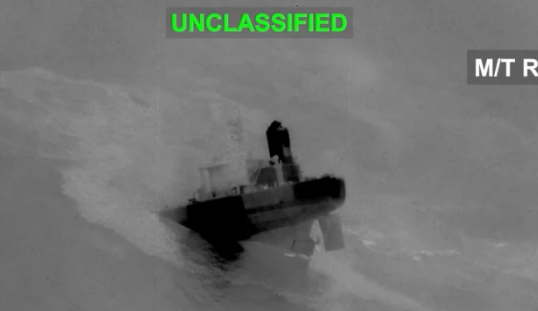
US Central Command released footage showing the attacks and said they were carried out after Iran’s IRGC had twice attempted to strike a US Navy warship with ballistic missiles during the preceding two days. According to Washington, no US personnel were injured.
CENTCOM forces destroyed five Iranian crude oil carriers, Sept. 8, after the Islamic Revolutionary Guard Corps (IRGC) targeted a U.S. Navy warship with ballistic missiles twice over the past two days. The U.S. warship successfully evaded the attempted Iranian attacks and… pic.twitter.com/Gi8a2tloN1
— U.S. Central Command (@CENTCOM) September 8, 2026
"Iran continues to try to hit US naval ships, and for every time they do that or try to do that, they're going to lose tankers," US Secretary of State Marco Rubio told reporters during a visit to Colombia.
Iran subsequently launched ballistic missiles at a facility near Al Azraq in Jordan that is used by American forces, according to a statement issued by the IRGC and carried by Iranian state media.
Tehran claimed the attack caused extensive damage, but Jordan reported that its air-defence systems had brought down 18 of the 20 missiles fired by Iran.
The remaining two landed in areas without residents, and Jordanian authorities said there were no casualties. A US official also said the Iranian attack had failed to achieve its objective and confirmed that all American troops in the country were safe.
The IRGC further announced on Wednesday that it had carried out attacks against 10 vessels. The targets reportedly included two US ships and eight oil tankers that were attempting to pass through what Iran described as a "prohibited and unsafe" section of the Strait of Hormuz, a crucial route for global energy supplies that has been heavily disrupted by Iranian attacks.
Throughout the conflict, Iran has repeatedly targeted US military facilities and Washington’s regional partners. Jordan has also been attacked several times, including a strike in July that resulted in the deaths of at least two US military personnel.
Iran has additionally warned oil tankers operating from ports in Kuwait and Bahrain, according to Iranian state media. Meanwhile, a maritime security source said a liquefied natural gas tanker sustained damage at the Emirati port of Khor Fakkan, although there was no immediate confirmation of who was behind the incident.
Oil prices continued climbing during early Wednesday trading, with Brent crude approaching $100 a barrel. Markets have become increasingly concerned that attacks on vessels could further restrict the movement of oil through the Strait of Hormuz. Supply worries have also been intensified by recent attacks carried out by Yemen’s Iran-backed Houthis against Saudi Arabia, one of the world’s leading energy producers.
Yemen’s Houthis said Saudi Arabia had carried out more than 30 airstrikes across several areas of the country, one day after the rebels launched a large-scale assault against their neighbour that left dozens of people injured, the international media reported reported.
“Saudi aircraft launched 32 airstrikes on various areas across the governorates of Marib, Al-Jawf, Taiz and Hodeida over the past few hours,” the rebels’ Almasirah television said.
The Houthi attacks on Tuesday targeted several locations in Saudi Arabia, adding another layer of tension to an already unstable regional situation.
According to reports, 73 people were injured in the Houthi assault, while several oil facilities caught fire. The strikes appeared to represent a major widening of the conflict, which began on February 28 following coordinated US-Israeli attacks against Iran.
The Houthis, who maintain control over much of Yemen’s populated territory, including the capital Sanaa, have also increased pressure on American allies by periodically disrupting maritime traffic on the opposite side of the Arabian Peninsula near the entrance to the Red Sea.
The group said it had conducted a large-scale operation deep inside Saudi territory. Drones and missiles were reportedly used against a Saudi military airbase in Khamis Mushait in the south, as well as facilities belonging to the Saudi state oil company in Abha, Najran and Jazan.
Saudi officials confirmed fires at the targeted locations and said that women and children were among those injured in the attacks.
Saudi Arabia has headed an Arab military coalition fighting the Houthis in Yemen for more than 10 years. The intervention began after the Houthis seized control of the capital and forced Yemen’s government out of the city. Although the fighting had eased considerably in recent years, a ceasefire has since collapsed.
The broader conflict across the Gulf has increasingly developed into a confrontation between Iran and the United States, with both sides attempting to use economic pressure and competing blockades to compel the other to back down.
Washington is seeking to keep global oil supplies moving by helping vessels navigate through the Strait of Hormuz, while simultaneously attempting to restrict Iranian oil exports through its blockade.
US Central Command said the five tankers destroyed on Tuesday were connected to a shadowy network that allegedly provides financial support to the IRGC and its allied groups across the region.
Iran has for years backed what it calls an "Axis of Resistance", a network that includes Palestinian group Hamas, Lebanon’s Hezbollah, Iraqi armed factions and Yemen’s Houthis.
Neo News | Copyright © 2026