Thu, September 17, 2026

Tehran (Web Desk): Iran’s Revolutionary Guards declared on Tuesday that they would prevent any oil shipments from leaving the Middle East if attacks by the US and Israel persist, prompting President Donald Trump to warn that the United States would retaliate far more forcefully if exports were blocked.
Despite these escalating threats, crude oil prices continued to decline, and global stock markets climbed after Trump expressed confidence that the conflict would end quickly, even as Iran appointed Mojtaba Khamenei as its new supreme leader, replacing his father, Ayatollah Ali Khamenei.
Trump said on Monday that US forces had caused significant damage to Iran’s military and predicted that the war would conclude sooner than the four-week period he had initially outlined, though he did not specify what a final victory would entail.
Israel has made clear that its goal is to dismantle Iran’s clerical leadership. “Our aim is to help the Iranian people throw off the chains of tyranny,” said Israeli Prime Minister Benjamin Netanyahu in a statement issued Tuesday. “Ultimately, it depends on them. But our operations have inflicted severe damage, and our hand remains extended. Working with the Iranian people, we can bring about a permanent resolution, if such a thing is possible in the life of nations.”
US officials have emphasized that Washington’s focus is on neutralizing Iran’s missile programs and nuclear capabilities, though Trump has said that only a compliant Iranian government will satisfy U.S. objectives.
Iran’s UN ambassador reported that at least 1,332 civilians have been killed and thousands injured since the US and Israel began their air and missile strikes in late February.
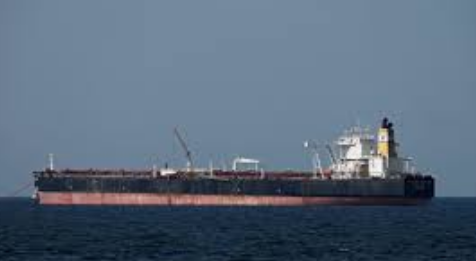
Trump warned that any attempt by Iran to block tanker passage through the Strait of Hormuz, which handles about one-fifth of global oil exports, would trigger intensified U.S. strikes. “We will hit them so severely that neither they nor anyone aiding them could recover control of that region,” he said during a Monday press briefing.
In response, a spokesperson for the Islamic Revolutionary Guards Corps stated that Iran alone would decide when the war ends, dismissing Trump’s warnings as “nonsense,” according to Iranian state media. Trump later reiterated his threat on Truth Social, stating that any disruption of oil flow through the Strait of Hormuz would result in strikes “TWENTY TIMES HARDER” than previous attacks.
Saudi Aramco, the world’s largest oil exporter, warned that prolonged disruption of shipping through the strait could have “catastrophic consequences” for global energy markets.
The Strait of Hormuz links major Gulf oil producers to the Gulf of Oman and the Arabian Sea and is a crucial route for worldwide oil exports. The ongoing conflict has effectively closed the strait, halting tanker traffic for over a week and forcing producers to suspend pumping as storage facilities fill to capacity.
Iranian Foreign Minister Abbas Araqchi said Tehran is unlikely to resume negotiations with Washington, noting that despite previous discussions, the U.S. chose to attack. “Talking to the Americans is no longer on our agenda,” he told PBS.
The appointment of Mojtaba Khamenei as supreme leader appeared to dash hopes for a quick resolution, causing oil prices to surge and global shares to fall. Markets later reversed course when Trump forecasted a swift end to the war and suggested a possible easing of Russian energy sanctions.
Following a discussion with Russian President Vladimir Putin, Trump announced that the U.S. would lift certain oil-related sanctions on “some countries” to relieve supply shortages. Reports indicate this could include additional sanctions relief on Russian oil, complicating efforts to punish Moscow for its war in Ukraine. Other measures under consideration include releasing oil from strategic reserves or restricting US exports.
Brent crude futures fell more than 10% on Tuesday after soaring nearly 29% on Monday to levels not seen since 2022. Stock markets also rebounded.
In the US, gasoline prices remain a politically sensitive issue, as voters cite rising fuel costs as a top concern ahead of November’s midterm elections, when Republicans will attempt to retain control of Congress. A Reuters/Ipsos poll released Monday found that 67% of Americans expect fuel prices to rise further, while only 29% approve of the war.
Tehran was enveloped in thick black smoke after an oil refinery was struck, marking a new escalation targeting Iran’s domestic energy infrastructure. World Health Organization chief Tedros Ghebreyesus warned that fires could contaminate local food, water, and air supplies.
Turkey reported that NATO air defenses intercepted a ballistic missile fired from Iran that entered Turkish airspace, the second such incident in the conflict. Iran has not yet commented.
Israel’s military said it launched additional strikes in central Iran and targeted Beirut, Lebanon, expanding operations after Hezbollah, the Iran-backed militia, fired across the border.
In Australia, five members of Iran’s women’s soccer team were granted humanitarian visas after seeking asylum due to fear of persecution. Canberra also pledged to send surveillance aircraft to the Middle East and provide missiles to the United Arab Emirates to help defend against Iranian attacks.
Neo News | Copyright © 2026