Fri, September 18, 2026

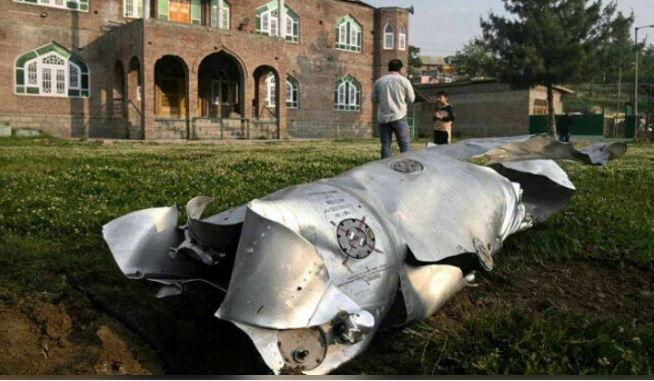
Washington (Web Desk): A new report submitted to the United States (US) Congress has credited Pakistan with achieving "military success over India" during the four-day conflict in May, noting that Islamabad’s use of advanced Chinese weaponry played a decisive role.
According to the report, these systems were instrumental in shooting down several Indian aircraft, including French-manufactured Rafales.
The clash erupted after India carried out strikes inside Pakistan following a deadly attack in Pahalgam, located in Indian Illegally Occupied Jammu and Kashmir (IIOJK), where 26 people had been killed.
The congressional document highlighted the deepening security ties between Pakistan and China, stressing that Islamabad relied on sophisticated Chinese equipment to bolster its operational edge.
During the hostilities, Pakistan deployed cutting-edge Chinese systems in live combat for the first time—among them the HQ-9 air-defence network, PL-15 air-to-air missiles, and J-10C fighter jets.
Pakistan maintains that its forces successfully downed seven Indian aircraft, including Rafales, a claim the report says has since strengthened China’s pitch in the global defence market.
The report also revealed that Beijing, soon after the fighting tapered off, offered Islamabad an expanded set of platforms, including 40 J-35 fifth-generation fighters, KJ-500 airborne surveillance aircraft, and advanced ballistic-missile defence systems.
The document underscored the intensity of the confrontation, noting that both sides targeted locations deeper inside each other’s territory than at any time in the last five decades.
The escalation began overnight on May 5 and 6 when India launched missile strikes it described as counterterror operations.
Those strikes, however, resulted in the martyrdom of several civilians and members of Pakistan’s security forces. Pakistan’s response included the destruction of Rafales, other Indian jets, and dozens of drones.
In retaliation, Pakistan’s military initiated a major counteroperation named Operation Bunyan-um-Marsoos, striking more than 20 Indian military positions across multiple regions.
The Pakistan Air Force also used JF-17 Thunder aircraft armed with hypersonic missiles to destroy India’s S-400 air-defence system in Adampur.
The confrontation came to an end on May 10 when the United States (US) brokered a ceasefire, bringing the tense military exchange between the two nuclear-armed neighbours to a halt.
Neo News | Copyright © 2026