Thu, September 17, 2026

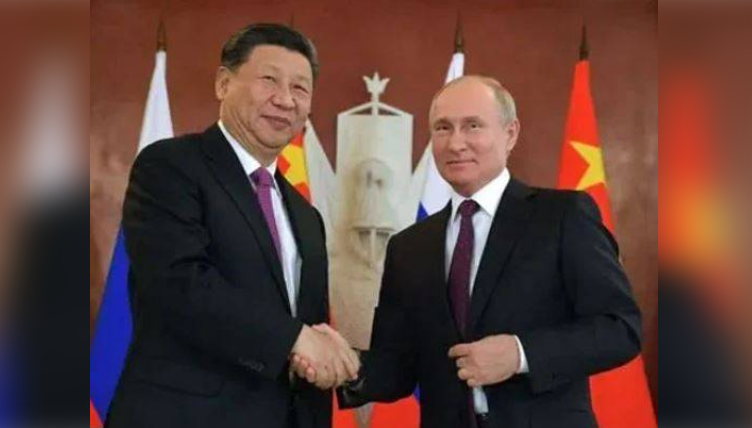
Moscow/Beijing (Web Desk): Chinese President Xi Jinping held a phone conversation with Russian President Vladimir Putin on Thursday, during which he emphasized that halting hostilities is the most pressing need in resolving the deepening conflict in the Middle East.
He stressed that military force is not an appropriate means for handling international disputes, as reported by Xinhua News Agency.
Xi called on all conflicting parties, especially Israel, to swiftly cease fire and prioritize the protection of civilian lives, particularly amid growing tensions between Iran and Israel.
He appealed for strict adherence to international legal standards to prevent further civilian harm and insisted that dialogue and negotiation offer the only sustainable resolution. Xi further urged the international community—especially those countries wielding considerable influence over the conflict—to actively work toward defusing the situation.
He reiterated China's willingness to maintain communication with all stakeholders, cooperate to uphold justice, and contribute constructively to restoring peace in the region.
Putin, during the same call, outlined Russia's stance on the Middle East crisis. He expressed serious concern over Israel's recent attacks on Iranian nuclear infrastructure, characterizing them as highly dangerous.
According to a statement from China's foreign ministry, Putin remarked that escalation serves no side's interest and emphasized that Iran's nuclear issue should be addressed through dialogue.
He also stressed the importance of ensuring the safety of nationals from third countries amid ongoing hostilities. As the conflict continues to evolve, Putin noted that Russia intends to stay in close coordination with China to help de-escalate tensions and maintain regional security.
This exchange between the two leaders took place as the conflict between Iran and Israel reached a critical and volatile stage.
According to Liu Zhongmin, a professor at the Middle East Studies Institute of Shanghai International Studies University, their conversation highlights a joint diplomatic effort in response to international concerns over the escalating violence.
Although the situation's resolution largely depends on the decisions made by Iran, Israel, and the United States, both China and Russia are seeking to facilitate de-escalation, despite not being directly involved in the conflict.
Liu noted that although progress will require broader global cooperation, the growing number of calls for dialogue suggest that negotiations may ultimately offer the most viable path forward.
On the same day, Indonesia and 23 other predominantly Muslim countries issued a collective statement denouncing Israel’s military operations against Iran and urging an immediate cessation of hostilities to prevent further destabilization of the region, according to the Indonesia Business Post.
Meanwhile, United Nations Secretary-General António Guterres voiced deep alarm over the continuing escalation. In a statement released Wednesday, he warned that further military actions could have catastrophic implications not only for the directly involved countries but for the broader region and global peace and security.
Military exchanges between Iran and Israel intensified on Thursday. The Times of Israel, citing Israeli military sources, reported that at least one of the 20 ballistic missiles fired by Iran toward Israel carried a cluster munition warhead.
In retaliation, Israeli warplanes targeted multiple locations in Iran, including the Arak heavy water nuclear facility. Iran's Supreme Leader, Ayatollah Ali Khamenei, responded on social media by asserting that reliance on U.S. support indicates Israel’s vulnerability.
He urged the Iranian public to remain steadfast, warning that displaying fear would only invite further aggression.
In a sharply worded statement reported by Al Jazeera, Israel’s defense minister declared that removing Khamenei was among the objectives of Israel’s military campaign against Iran. Over the past two days, there has been considerable speculation surrounding former U.S. President Donald Trump’s stance on potential American involvement.
A Bloomberg report indicated that top U.S. officials are actively preparing for the possibility of launching a strike on Iran, possibly as soon as the upcoming weekend.
Trump, when questioned at the White House, responded that he has ideas on how to proceed but would only make a final decision at the last possible moment, citing the fluid nature of the crisis.
According to Niu Xinchun, director of the China-Arab Research Institute at Ningxia University, the United States has recently redeployed significant military assets to the Middle East, including aircraft carriers, bombers, and aerial refueling planes.
While these moves are presented as precautionary in response to Iranian threats, Niu cautioned that a shift from defensive posturing to offensive operations could happen abruptly.
A direct American attack would almost certainly provoke retaliation from Iran, potentially targeting U.S. military installations or disrupting shipping in the Strait of Hormuz—a scenario Washington hopes to avoid.
The question of U.S. military involvement remains unresolved. Though Washington officially denies direct engagement, it continues to support Israel through intelligence sharing, missile defense, and strategic guidance.
As noted by Tian Wenlin, a researcher at the China Institutes of Contemporary International Relations, the U.S. may already be considered partially engaged.
Whether it will move toward full-scale involvement depends on future developments and American strategic calculations.
Tian also pointed out that U.S. support has emboldened Israel's aggressive posture, increasing pressure on Iran and worsening the imbalance of power, thereby making the situation even more precarious.
Within the United States, concerns are mounting about the lack of clarity in the administration's approach. Politico reported that leading Senate Democrats are urging Trump to present a clear plan for managing the Iran crisis, criticizing the lack of transparency with Congress.
Observers warn that any further escalation could ignite a broader regional war, endangering thousands of U.S. personnel stationed in the Middle East.
Analysts suggest that the current U.S.-Israel operational strategy—where Israel leads military actions while the U.S. provides rear-end support—may allow Washington to minimize direct exposure.
However, this arrangement contributes to rising tensions and makes resolving the crisis more complicated.
Neo News | Copyright © 2026