Fri, September 18, 2026

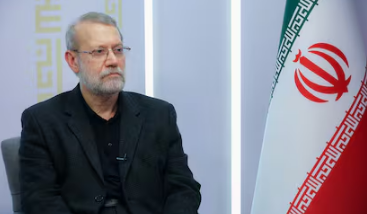
Tehran (Web Desk): Iran announced on Tuesday that Ali Larijani, the secretary of its Supreme National Security Council, was killed in an Israeli airstrike.
In a statement, Iran’s Supreme National Security Council said Larijani was not alone at the time of the incident. He was killed together with his son, Morteza Larijani, senior security official Ali Reza Bayat, and several members of his security team in what authorities termed a “targeted assassination.”
The Israeli military confirmed carrying out the strike near Tehran, describing it as a “precise” operation in which Larijani was “eliminated.” Israel characterized him as the “de facto leader” of Iran’s regime in its official statement.
In a separate strike, the Israeli forces claimed the death of Gholamreza Soleimani, the commander of Iran’s Basij forces.
The Islamic Revolutionary Guard Corps (IRGC) also acknowledged the deaths of the senior figures, denouncing the act as a “cowardly assassination.” Officials added that the incident highlights the vital role of the Basij in Iran’s continuing standoff with the United States and Israel.
The Basij, a large volunteer paramilitary network believed to include close to one million members, is instrumental in maintaining internal order and operates under the authority of Iran’s military leadership.
Larijani had been publicly seen just last Friday during Quds Day events in Tehran, only hours before reports emerged that the US had placed him on a reward list, offering up to $10 million for information on ten senior Iranian officials.
Since February 28, Israel and the United States have conducted joint operations against Iran, resulting in roughly 1,300 deaths, including that of former Supreme Leader Ayatollah Ali Khamenei.
Iran has responded with missile and drone attacks targeting Israel, Jordan, Iraq, and Gulf countries hosting US military installations.
These retaliatory strikes have caused casualties, damaged infrastructure, and disrupted global markets and air travel.
Neo News | Copyright © 2026