Thu, September 17, 2026

By Parivish S. Kanwar
I am a Houston, Texas-born American high school student, and this summer I was fortunate to have completed medical internships at some of Pakistan's top hospitals (thank you, Mama). As a newcomer, I looked forward to learning how Pakistan would vary socially, politically, and culturally. What I hadn't entirely expected was how social realities and local attitudes might influence the practice of healthcare — and often in profoundly inspiring ways.
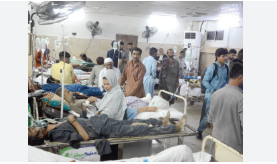
In America, my understanding of a hospital was in terms of immaculate corridors, strict sanitation guidelines, and an appointment system. My initial internship experience in Pakistan, at Fatima Memorial Hospital (FMH), opened my eyes. Patients were handled in common areas, and the hospital was never short of action and vibrancy. My surprise at the selfless dedication of the staff was in contrast to the non-stop inflow of patients. The compassion and dedication extended to each of the countless patients being processed was incredible. The lecture halls were well structured, and the entire atmosphere was rich in learning and teamwork.
My second internship at Indus Hospital was one of the most empowering experiences I have had. Completely supported by donations, Indus provides all of its services entirely free of cost — something I had never witnessed in America. The hospital's modern facilities, effectiveness, and open purpose truly overwhelmed me. It had extremely high standards of cleanliness, tidiness, and confidentiality of patients. I was amazed at how professionally the hospital operated and how sincerely everybody worked to heal individuals who could not afford to have private treatment. It was motivating to see the extent of compassion and trust that seemed to be the central guiding principles of this organization.
My third internship, at Chaudhry Muhammad Akram Teaching and Research Hospital, was where I gained some of my most impactful hands-on experience. I was involved in a number of community-oriented healthcare initiatives — from educating new mothers regarding postpartum depression and mental health awareness to training basic life support in local schools and planning health awareness campaigns. These projects helped me understand that hospitals in Pakistan are not just about curing illness — they are working to better communities and disseminate knowledge. The Quality Improvement (QI) department of the hospital was receptive and team-oriented, and they even made a couple of my recommendations a reality, which made me proud and a part of things.
In addition, I worked an internship in healthcare journalism with Neo News, which became one of the most eye-opening parts of my journey. I got to go to hospitals such as Services and Jinnah, where I met women from all sorts of backgrounds — young mothers, nurses, caregivers, and patients who had such immense strength in silence. Listening to them made me remember that medicine is not all about health care; it's about compassion, listening, and a comprehension of the human narrative that exists beneath each diagnosis. Several of the women I encountered were managing family, sickness, and hope simultaneously, and their unassuming strength had a profound impact on me. Collaborating on stories that sought to amplify their voices made me understand how much power it is to have women working for women — to give voice to their stories, to bring attention to the issues, and to make care more humane.
Throughout all three hospitals, there was one constant: an overwhelming sense of humanity. Patients came to healthcare with appreciation, and physicians treated their profession as a service to society. I discovered that medicine here is more than science — it's about heart.
Reflections
The largest disparity that I saw between the U.S. and Pakistan was in the approach to healthcare. People in Pakistan greet it with gratitude and humility, whereas people in the U.S. sometimes seem to take it for granted. This experience also reminded me of the importance of gratitude and compassion.
I left with two enduring lessons: first, that medicine is not just about treatment but also about trust and dignity; and second, that profound change can be sparked by small, simple acts — kindness, compassion, and honest human connection.
In fact, if anything, my experience in Pakistan solidified my commitment to this work — to being part of an institution that weaves compassion together with care. Things I learned there will remain with me for the rest of my life and continue to inform the way I perceive medicine, privilege, and service.
Disclaimer: The views and opinions expressed in this article are solely those of the author and do not necessarily reflect the official policy or position of neo news.pk
Neo News | Copyright © 2026