Thu, September 17, 2026

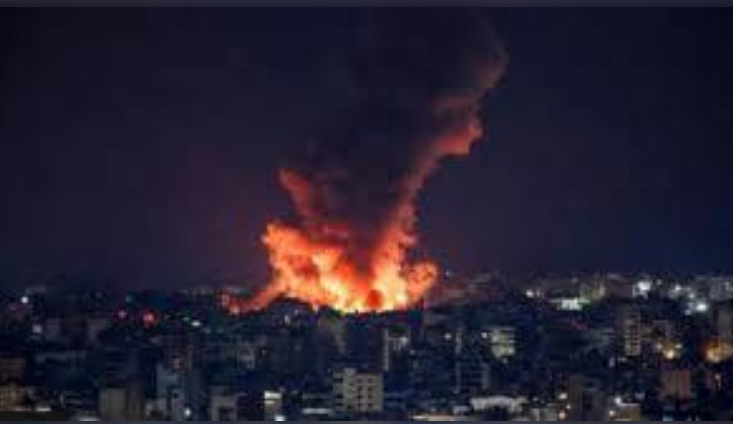
Tehran/Tel Aviv: The conflict between Israel and Iran has sharply escalated, with both nations launching intense attacks that have caused significant destruction and casualties.
On Sunday night, Israel's military confirmed that several sites were hit in the latest Iranian missile barrage, including a residential building on the Mediterranean coast.
Iran’s military said it had launched a new wave of ballistic missiles targeting Tel Aviv, Haifa, and Ashkelon.
Earlier, Israel had carried out a sweeping aerial assault across Iran, striking targets from the west to Tehran and as far east as Mashhad. This came after Israeli Prime Minister Benjamin Netanyahu vowed to make Iran pay a "heavy price" for killing civilians.
In response to the ongoing strikes, Iran announced that mosques, metro stations, and schools would be opened as bomb shelters for civilians. The Iranian military declared that its "mission will continue" for as long as needed.
This conflict marks the first time the two longtime adversaries have directly exchanged fire at such an intense level, raising concerns of a broader regional war. As Israeli strikes continued across Iran on Sunday, Iran retaliated with further missile barrages.
Explosions were heard over Jerusalem and other cities, with aerial defense systems activated in Tehran. Residential areas in both nations have been hit, with civilians among the dead.
"Iran will pay a very heavy price for the premeditated murder of civilians, women and children," Netanyahu said while visiting the missile strike site in Bat Yam.
Iranian missile strikes have killed at least 10 people in Israel overnight, according to local authorities, bringing the death toll to 13 since Iran began its retaliatory campaign on Friday.
At least 380 have been injured. Meanwhile, Iranian state media reported that an Israeli strike on Sunday killed at least five people in a residential building in central Tehran. Other Iranian media outlets reported that Israeli attacks on Friday and Saturday killed 128 people and injured around 900, including many women and children.
Israel’s military announced that it had targeted Mashhad airport, in Iran’s far east, which it said was "approximately 2,300 kilometres from Israel," making it the longest-range strike in the current conflict.
Thick smoke clouds were seen over Tehran after Israeli airstrikes hit two major fuel depots. Reports from Iranian media said Israel also struck the police headquarters in Tehran. Later, Iran’s deputy foreign minister confirmed that a foreign ministry building had been hit, injuring several employees.
The Israeli military stated that more than 80 targets were hit in Tehran alone overnight.
With much of the capital’s infrastructure strained, long lines were seen at gas stations while most businesses remained closed.
Tehran’s traffic police reported significant congestion as many tried to leave the city. Despite this, some residents chose to stay. In Israel, six people were killed and around 180 injured in Bat Yam due to an overnight missile strike. In the northern town of Tamra, a strike destroyed a three-storey building, killing four women late Saturday.
On Sunday morning, more explosions shook Tehran. Israel claimed to have struck the Iranian defense ministry’s headquarters, with Iranian news agency Tasnim confirming damage to the site.
Israel also said it had targeted the Organization of Defensive Innovation and Research (SPND), a secretive institution.
Iranian authorities later announced the arrest of two suspects allegedly linked to Israel’s Mossad, while Israel said it had detained two individuals suspected of connections with Iranian intelligence.
Israel’s military issued warnings to Iranian civilians to evacuate areas near weapons facilities. In return, Iran warned Israeli civilians to leave “Israeli-occupied territories.”
"Warnings for you in the coming days: Leave the occupied territories, because, certainly, they won't be inhabitable in the future!" declared Colonel Reza Sayyad, spokesperson for the Iranian armed forces, shortly before Iran launched a new wave of missile strikes under its operation “True Promise 3.” The barrage followed Israeli strikes on Tehran that marked the third day of Israeli military aggression, according to Iranian officials.
Concerns remain that the fighting could spill over into neighboring countries. Iran’s top diplomat Abbas Araqchi stated that Iran does not wish for the conflict to extend into the region unless circumstances force it.
"Dragging the conflict to the Persian Gulf is a strategic mistake, and its [Israel's] aim is to drag the war beyond Iranian territory," he said, also accusing Israel of attempting to derail the ongoing Iran–US nuclear negotiations.
In an interview with Fox News, Netanyahu stated that Israel had eliminated Iran's intelligence chief Mohammad Kazemi, saying they had recently "got the chief intelligence officer and his deputy in Tehran" during raids over the capital.
Meanwhile, a senior US official told an international media outlet that that former President Donald Trump had vetoed an Israeli plan to assassinate Iran’s Supreme Leader Ayatollah Ali Khamenei.
"We found out that the Israelis had plans to hit Iran's supreme leader. President Trump was against it and we told the Israelis not to."
Neo News | Copyright © 2026